

Anti-aging diet workflow: your step-by-step guide
TL;DR:
- An anti-aging diet workflow combines plant-forward dietary patterns, precise meal timing, periodic fasting-mimicking cycles, and biomarker monitoring to slow aging and enhance vitality. Consistent adherence, personalized adjustments based on biological data, and strategic meal prep are essential for long-term success. Prioritizing simplicity over over-complication maximizes sustainable health benefits and supports lasting longevity.
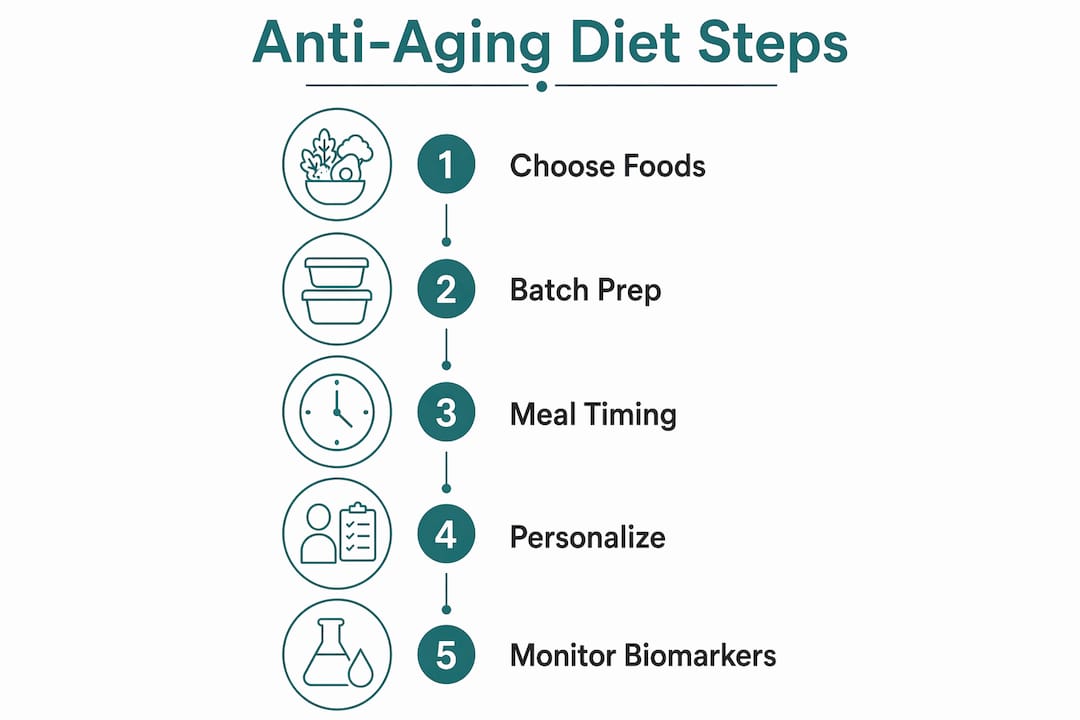
An anti-aging diet workflow is a structured, evidence-backed sequence of eating decisions, timing strategies, and monitoring steps designed to slow biological ageing and extend healthy lifespan. Known in clinical nutrition as a precision longevity nutrition protocol, this approach goes well beyond choosing “healthy foods.” It combines dietary pattern selection, circadian meal timing, fasting-mimicking cycles, and biomarker feedback into a repeatable system. Overall dietary patterns such as the Mediterranean and DASH diets consistently outperform single superfoods for longevity outcomes. The result is a personalised, measurable plan that supports metabolic health, skin integrity, muscle preservation, and vitality well into later life.
What foods form the foundation of an anti-aging diet workflow?
The most effective dietary baseline for slowing biological ageing is a plant-forward, whole-food pattern. The Mediterranean diet, the DASH diet, and broadly plant-based frameworks all share the same core architecture: abundant vegetables, fruits, whole grains, legumes, nuts, seeds, healthy oils such as extra-virgin olive oil, and lean proteins including fish and pulses. Longevity-focused eating patterns consistently emphasise these categories while limiting processed meats, added sugars, refined grains, excess sodium, and alcohol.

The anti-inflammatory and antioxidant properties of these foods are central to their benefit. Berries, leafy greens, cruciferous vegetables, and oily fish such as salmon and mackerel reduce systemic inflammation, which is a primary driver of accelerated cellular ageing. Nuts and seeds supply vitamin E, zinc, and selenium, all of which support skin structure and immune function. Legumes provide fibre and plant protein that feed beneficial gut bacteria, which in turn influence metabolic age.
Foods to limit or remove from your baseline include:
- Processed meats (salami, bacon, sausages): associated with elevated inflammatory markers
- Added sugars and refined grains (white bread, sugary drinks): accelerate glycation, which damages skin collagen
- Excessive sodium: found in packaged snacks and ready meals, linked to cardiovascular ageing
- Alcohol above moderate intake: disrupts sleep quality and depletes B vitamins critical for cellular repair
Meal preparation is the single most reliable adherence tool for this dietary baseline. Batch-cooking grains, roasting a tray of vegetables, and portioning nuts and seeds at the start of the week removes the decision fatigue that derails most anti-aging meal plans.
Pro Tip: Prepare one foundational food each day rather than attempting a full weekly batch cook. Cooking a pot of lentils on Monday, roasting sweet potatoes on Tuesday, and hard-boiling eggs on Wednesday builds a usable ingredient library without overwhelming your schedule.
How does meal timing fit into an anti-aging diet workflow?
Meal timing is not a secondary consideration. It is a structural component of any effective anti-aging nutrition strategy. Research on 901 older adults found that an optimal nighttime fasting duration of 13 to under 14 hours, with breakfast between 6 and 7 am and dinner between 5 and 6 pm, produced the highest odds of healthy ageing outcomes. This finding reflects an inverted U-shaped relationship: too little fasting and too much fasting both reduce benefit.
The mechanism is circadian biology. Your body’s metabolic processes, including insulin sensitivity, cortisol rhythm, and cellular repair, follow a 24-hour clock. Eating in alignment with this clock, rather than against it, improves glucose regulation and reduces oxidative stress. Consistent breakfast and dinner times maximise this benefit. Shifting one meal without the other produces suboptimal results, which is why timing both anchors matters.
Beyond daily circadian timing, fasting-mimicking diet (FMD) cycles offer a periodic intervention with distinct cellular benefits. FMD protocols, such as the ProLon programme, restrict calories to approximately 1,100 kcal on day one and 700 to 800 kcal on days two through five. FMD cycles improve autophagic flux and metabolic health markers compared to a normal diet. Autophagy is the cellular self-cleaning process that removes damaged proteins and organelles, and its activation is directly relevant to slowing biological ageing.
The table below compares daily circadian timing with periodic FMD cycles to clarify when each approach applies:
| Approach | Frequency | Primary mechanism | Best suited for |
|---|---|---|---|
| Circadian meal timing | Daily | Aligns metabolism to body clock | Baseline metabolic health |
| Fasting-mimicking diet (FMD) | Monthly or quarterly cycles | Activates autophagy, lowers IGF-1 | Periodic cellular reset |
| Overnight fasting (13 to 14 hours) | Daily | Metabolic rest and repair | Consistent healthy ageing |
Pro Tip: If you find a 5 pm dinner too early to sustain socially, shift your breakfast to 7 to 8 am and your dinner to 6 to 7 pm. The 13-hour overnight window is the non-negotiable variable. The absolute clock times are secondary to maintaining that gap consistently.
How to personalise your anti-aging diet workflow using biomarkers
Static meal plans have a ceiling. The next level of anti-aging nutrition is a metabolomics-guided precision framework that uses a Mediterranean dietary baseline and progressively adjusts foods and supplements based on measurable biological age response. This approach treats your diet as a dynamic system rather than a fixed prescription.
Metabolomic fingerprinting measures hundreds of metabolites in blood or urine to estimate biological age and identify specific nutritional deficiencies or excesses. Clinicians use this data to make targeted, incremental changes rather than overhauling the entire diet simultaneously. Incremental dietary adjustments guided by metabolome data avoid the common problem of multiple simultaneous changes obscuring which intervention actually produced the benefit.
For practical home-based monitoring, the following biomarkers provide actionable feedback without clinical-grade laboratory access:
- Fasting glucose and HbA1c: reflect long-term blood sugar regulation and glycation risk
- Triglycerides and HDL cholesterol: indicate dietary fat quality and cardiovascular ageing risk
- Vitamin D (25-OH): low levels are associated with accelerated muscle and bone ageing
- Ferritin and B12: critical for energy metabolism and neurological health, especially in plant-forward diets
- C-reactive protein (CRP): a direct marker of systemic inflammation and dietary anti-inflammatory efficacy
FMD protocols also incorporate blood biomarker assessments including glucose, insulin, IGF-1, and autophagy markers to provide precision feedback on cellular ageing response. This clinical model is increasingly accessible through private health screening services. The principle is the same whether you use a full metabolomics panel or a standard GP blood test: measure, adjust one variable, measure again.
For a broader overview of how to adjust diet interventions using biological age data, the anti-ageing nutrition guide for vitality after 40 from Vivetus covers the process in practical detail.
Step-by-step meal planning for an anti-aging diet workflow
A functional anti-aging meal plan targets specific daily nutrient thresholds rather than simply listing “healthy foods.” A well-structured 7-day healthy ageing meal plan targeting approximately 80 g of protein and 30 g of fibre daily at around 1,800 calories supports muscle preservation, bone density, and skin health simultaneously. These targets apply broadly to adults over 40, not exclusively to women.
The table below summarises key daily nutrient targets and practical food sources to meet them:
| Nutrient | Daily target | Example food sources |
|---|---|---|
| Protein | 75 to 90 g | Salmon, eggs, Greek yoghurt, lentils, tofu |
| Fibre | 28 to 35 g | Oats, chickpeas, broccoli, flaxseed, berries |
| Vitamin C | 75 to 100 mg | Bell peppers, kiwi, strawberries, citrus |
| Vitamin D | 15 to 20 mcg | Oily fish, fortified dairy, eggs, sunlight |
| Healthy fats (omega-3) | 1.1 to 1.6 g ALA | Walnuts, chia seeds, flaxseed, mackerel |
A practical weekly structure rotates protein sources across the seven days: oily fish twice, legumes twice, eggs twice, and lean poultry or tofu once. This rotation delivers amino acid variety, prevents meal fatigue, and covers the full micronutrient spectrum without requiring supplementation for most adults. Whole grains such as quinoa, brown rice, and oats anchor the carbohydrate component, providing sustained energy and the soluble fibre that supports gut health and skin hydration.
Meal prep for skin health specifically benefits from prioritising vitamin C-rich foods at lunch and dinner, as vitamin C is required for collagen synthesis. Pairing vitamin C sources with iron-rich plant foods such as spinach and lentils also improves non-haem iron absorption, which supports energy levels and reduces fatigue-related dietary non-compliance.
Pro Tip: Build your weekly shop around five core ingredients that each serve multiple meals: eggs, oats, lentils, frozen spinach, and tinned salmon. These five alone cover protein, fibre, omega-3, iron, and B vitamins at low cost and minimal preparation time.
What are the common challenges in maintaining an anti-aging diet workflow?
The most frequent barriers to long-term adherence are time constraints, meal fatigue, and hunger during fasting phases. Each has a direct, practical solution. Small, consistent daily actions, described in dietitian guidance as “longevity micro-moves,” are more effective for sustaining healthy ageing habits than periodic intensive efforts.
The most common mistakes that undermine progress include:
- Skipping breakfast: disrupts circadian timing and reduces the metabolic benefit of overnight fasting
- Unbalanced fasting: extending overnight fasting beyond 16 hours without medical supervision risks muscle catabolism
- Eliminating entire food groups: removing all carbohydrates or all fats creates micronutrient gaps that accelerate rather than slow ageing
- Changing too many variables at once: makes it impossible to identify which dietary change produced a measurable biomarker improvement
Social eating is a genuine challenge. Rigid adherence at social occasions is neither realistic nor necessary. The 80/20 principle applies: consistent adherence on 80% of meals produces the majority of the metabolic benefit. Flexibility on the remaining 20% protects psychological wellbeing and social connection, both of which are independently associated with longevity.
Realistic goal-setting is the most underrated component of any anti-aging nutrition strategy. A plan you follow 80% of the time for two years outperforms a perfect plan followed for three weeks.
Key takeaways
An effective anti-aging diet workflow requires a plant-forward dietary baseline, consistent circadian meal timing, periodic fasting-mimicking cycles, and iterative biomarker-guided adjustments working together as a system.
| Point | Details |
|---|---|
| Dietary baseline | Mediterranean and plant-forward patterns form the most evidence-supported foundation for healthy ageing. |
| Meal timing | A 13 to 14-hour overnight fast with fixed breakfast and dinner times maximises circadian metabolic benefit. |
| FMD cycles | Five-day fasting-mimicking protocols activate autophagy and improve metabolic markers beyond calorie restriction alone. |
| Biomarker monitoring | Tracking glucose, CRP, vitamin D, and lipids allows targeted, incremental dietary adjustments rather than guesswork. |
| Adherence strategy | Preparing one healthy food daily and applying the 80/20 principle sustains long-term compliance without rigidity. |
Why I think most people overcomplicate this
Most articles on anti-aging nutrition present an overwhelming list of superfoods, supplements, and protocols as if you need to adopt all of them simultaneously. In my experience working with nutritional frameworks and reviewing the clinical literature, the opposite is true. The research on metabolomics-guided precision nutrition is explicit: change one variable, measure the response, then adjust. That is the entire methodology.
The people who see the most meaningful changes in their metabolic age are not the ones who overhaul everything at once. They are the ones who fix their meal timing first, hold it for four weeks, then add a dietary change, then assess a biomarker. Patience is not a soft skill here. It is a scientific requirement. You cannot interpret feedback from a system you are constantly changing.
The other thing I would emphasise is that the fasting-mimicking diet is not a weight-loss tool. Its value lies in autophagy activation and IGF-1 reduction. If you approach FMD cycles purely as a calorie-restriction strategy, you miss the point and likely abandon the protocol before it produces measurable biological age changes. Treat it as a quarterly cellular maintenance intervention, not a diet.
The direction this field is heading, towards real-time metabolomic feedback and personalised nutrient prescriptions, is genuinely exciting. But the fundamentals are available to anyone right now: eat plants, time your meals, fast overnight, and measure what matters.
— Jord
Support your anti-aging nutrition with Vivetus
Vivetus provides scientifically-backed nutritional products and resources designed specifically for adults focused on healthy ageing and long-term vitality. Whether you are building your first structured anti-aging meal plan or refining an existing protocol with biomarker data, the Vivetus catalogue covers the supplement support that a whole-food diet alone may not fully address. Explore the full range of healthy ageing products to find evidence-supported options aligned with your nutritional goals. For a structured starting point, the Vivetus guide on selecting nutritional products for healthy ageing walks through the five-step evaluation process used to match products to individual metabolic needs.
FAQ
What is an anti-aging diet workflow?
An anti-aging diet workflow is a structured, stepwise nutrition system combining dietary pattern selection, circadian meal timing, fasting-mimicking cycles, and biomarker monitoring to slow biological ageing and support long-term vitality.
What are the best foods for youthful skin and longevity?
Oily fish, berries, leafy greens, extra-virgin olive oil, nuts, seeds, and legumes form the most evidence-supported food group for skin health and longevity, primarily through their anti-inflammatory and antioxidant properties.
How long should I fast overnight for anti-aging benefits?
Research on older adults identifies 13 to under 14 hours of overnight fasting, with breakfast between 6 and 7 am and dinner between 5 and 6 pm, as the optimal fasting window for healthy ageing outcomes.
How does a fasting-mimicking diet differ from standard intermittent fasting?
A fasting-mimicking diet is a structured 5-day low-calorie protocol (approximately 1,100 kcal on day one, 700 to 800 kcal on days two through five) that activates autophagy and reduces IGF-1. Standard intermittent fasting focuses on daily eating windows without the same cellular repair mechanisms.
How often should I review my anti-aging diet plan?
Biomarker assessments every three to six months provide sufficient data to make one or two targeted dietary adjustments per cycle. More frequent changes prevent accurate interpretation of which intervention produced a measurable result.