

Berberine: formulation and 1g/day give modest weight loss in NL
Berberine can support modest weight loss, but the effect is small to moderate, not dramatic, and it depends heavily on dose and formulation. Meta-analyses show measurable reductions in body weight, BMI, and waist circumference at daily doses of one gram or more split across meals, with better results from optimised, higher-absorption formulations. Berberine is contraindicated in pregnancy and breastfeeding, and it interacts with several common medicines, so check with a clinician before starting.
TL;DR:
- Effective doses of one gram or more daily, taken for at least eight weeks and split before meals, produce the most consistent weight loss results.
- Improved formulations with lipid-based or liposomal delivery can increase berberine’s blood absorption up to tenfold compared to standard capsules.
- Side effects such as nausea or bloating are common at higher doses, and berberine should be avoided during pregnancy, breastfeeding, or when taking certain medications.
- Clinical evidence shows modest weight reductions of less than two kilograms, mainly in people with metabolic syndrome or diabetes, not in the general population.
- Expect visible weight and metabolic changes to take at least two months, with internal markers like blood glucose shifting sooner than external measurements.
Table of Contents
- What is berberine and how does it come as a supplement?
- How does berberine aid weight loss at a biological level?
- What do clinical trials actually show about berberine and weight loss?
- How should you dose and time berberine for best results?
- What are the safety risks and who should avoid berberine?
- How do you choose a good berberine supplement?
- So, is berberine worth trying for weight loss?
- Could the placebo effect explain some of berberine’s results?
- Does berberine work better alongside diet and exercise?
- How long does berberine take to show results, and what’s realistic?
- Why Vivetus includes berberine in its metabolic support range
- Try berberine the way the evidence supports
- Sources
What is berberine and how does it come as a supplement?
Berberine is a yellow, bitter-tasting alkaloid found in several plants, including barberry, goldenseal, and Coptis chinensis. Traditional medicine systems in Asia and the Middle East have used these plants for centuries, mostly for digestive and infection-related complaints, long before anyone linked berberine to blood sugar or weight.
Modern supplements isolate the compound rather than relying on the whole plant. You’ll typically find it as:
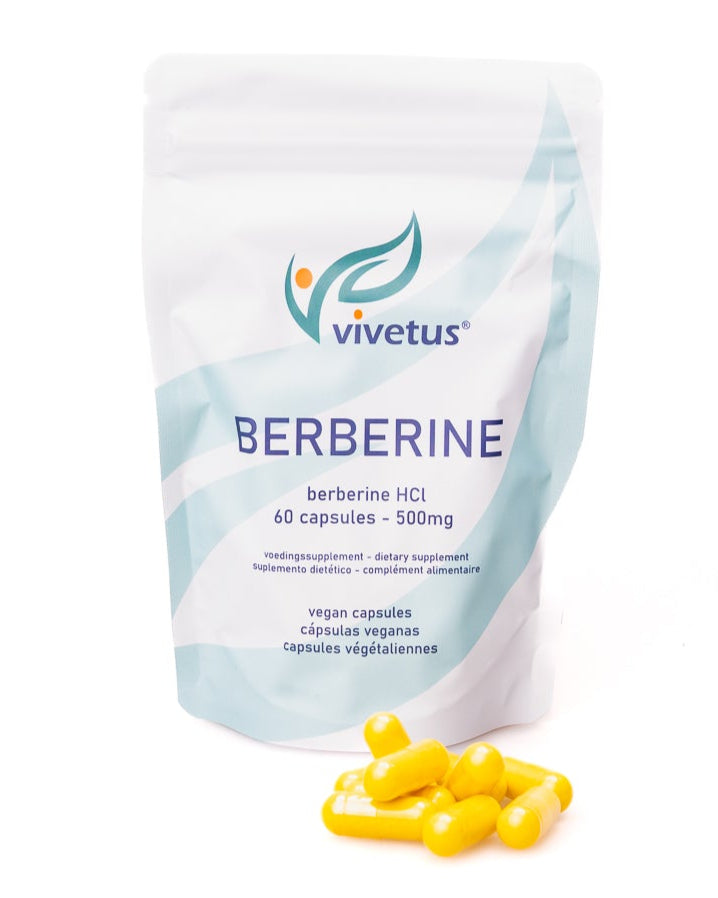
- Berberine HCl capsules, usually labelled at 400 to 500 mg per capsule
- Standardised plant extracts with a stated percentage of berberine content
- Newer lipid-based or liposomal formulations designed to improve absorption
That last category matters more than most labels suggest, because plain berberine HCl struggles to get into the bloodstream in useful amounts. That’s a formulation problem worth understanding before you buy anything, and it’s the reason this article keeps circling back to how a product is made, not just what’s on the front of the bottle.
How does berberine aid weight loss at a biological level?
Berberine’s main claim to metabolic relevance rests on its ability to activate AMPK, an enzyme often described as the body’s energy sensor. When AMPK switches on, cells shift towards burning stored fuel and taking up glucose more readily, which is part of why researchers grouped berberine alongside metformin in early comparative studies.
Beyond AMPK, berberine appears to:
- Improve insulin sensitivity and reduce how much glucose the liver releases into the bloodstream
- Shift lipid metabolism, with some studies noting reductions in triglycerides and LDL cholesterol
- Lower inflammatory markers such as CRP, which may indirectly support metabolic function
- Alter gut microbiome composition, an area researchers are still mapping in detail
Berberine’s oral bioavailability is often below 1%, according to a pharmaceutics review covering formulation strategies. Most of what you swallow never reaches systemic circulation intact, largely due to rapid first-pass metabolism in the liver. This single fact explains almost everything else in this article: why doses look high, why formulation innovation exists, and why two products with identical milligram counts on the label can behave very differently in your body. A pharmacology review also points to NF-κB modulation and SIRT-1 pathways as additional mechanisms, though these are better understood in cell and animal models than in humans.
What do clinical trials actually show about berberine and weight loss?
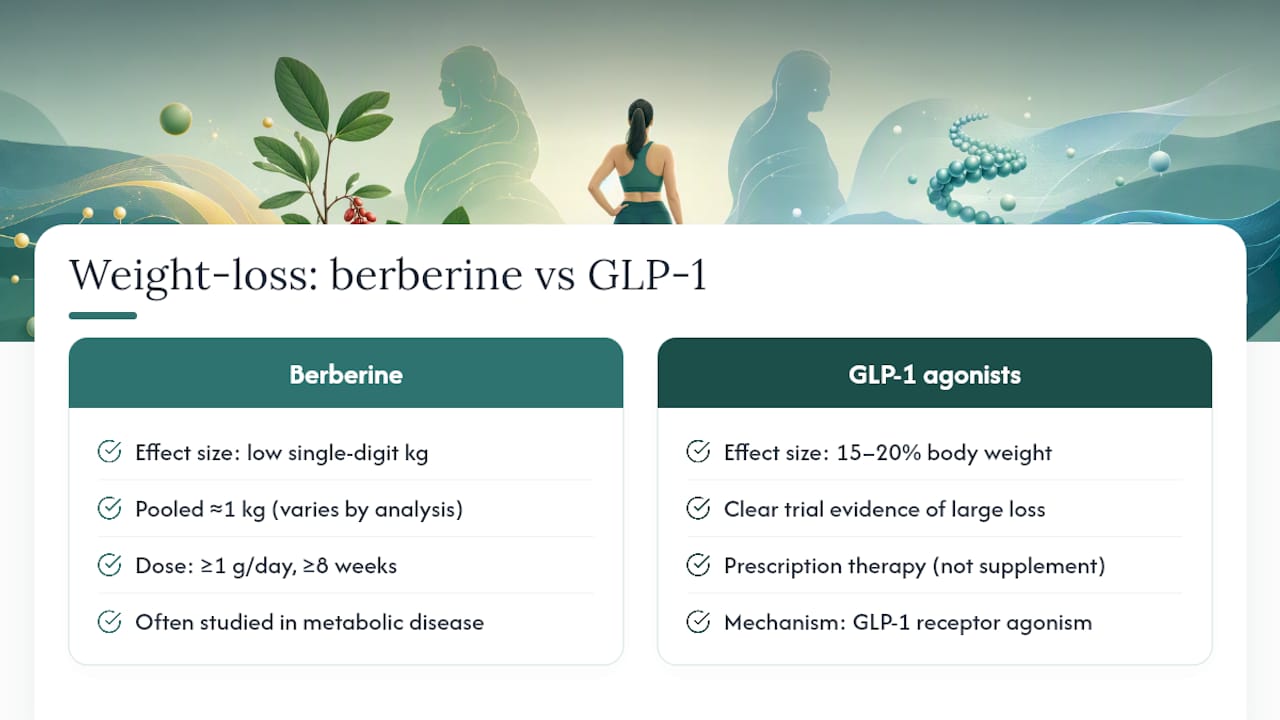
The honest answer: modest, inconsistent, but real in aggregate. A systematic review and meta-analysis of randomised controlled trials found statistically significant reductions in body weight, BMI, and waist circumference with berberine supplementation. Pooled estimates vary between analyses. Some report a weighted mean difference in body weight around a couple of kilograms; more recent, stricter meta-analyses that exclude lower-quality trials put the figure closer to just under one kilogram. That spread itself tells you something about how sensitive these results are to which studies get included.
Dose and duration matter more than most marketing suggests. Effects tend to show up most reliably at daily doses of one gram or more, sustained for at least eight weeks. Shorter trials or lower doses frequently show no meaningful difference from placebo.
Weight and metabolic effects appear inconsistent across the literature, often emerging only at doses of 1 gram per day or higher and durations of eight weeks or longer, with many included studies carrying a notable risk of bias.
That framing comes from the National Center for Complementary and Integrative Health’s overview, and it’s a useful corrective to overheated claims. A lot of the supportive trials recruited people with existing metabolic disease, such as type 2 diabetes or metabolic syndrome, rather than the general population, so results may not transfer directly to someone without those conditions.
This is also where the “natural Ozempic” comparisons circulating online fall apart. GLP-1 receptor agonists produce weight loss in the range of 15 to 20% of body weight in trial populations. Berberine’s meta-analysed effect sits in low single-digit kilograms. The mechanisms don’t overlap either. Treating berberine as a substitute for prescription therapy, rather than a modest adjunct, sets you up for disappointment.
How should you dose and time berberine for best results?
Berberine has a short half-life and produces multiple absorption peaks through the day, which is why splitting the dose beats taking it all at once.
- Start with a lower dose, such as 500 mg once daily, for the first week to gauge tolerance.
- Build up to a total of 1,000 to 1,500 mg per day, split into two or three doses.
- Take each dose shortly before a meal, since ongoing pharmacokinetic trials are specifically testing how fasting versus fed states change absorption and peak concentration.
- Watch for gastrointestinal discomfort and scale back the dose if it appears.
Formulation is where the real gains sit. Standard berberine HCl fights that under 1% bioavailability ceiling on its own. Lipid-based and liposomal delivery systems change the picture: a pharmacokinetic study of advanced formulations recorded up to a tenfold increase in peak blood concentration and roughly five-times-faster time to peak compared with standard capsules.
Pro Tip: If a product’s listing doesn’t mention any pharmacokinetic or clinical data behind its formulation, assume you’re getting standard absorption, not enhanced. Ask before you buy.
What are the safety risks and who should avoid berberine?
Gastrointestinal side effects are the most common complaint, and they scale with dose. Expect a possibility of nausea, bloating, constipation, or diarrhoea, especially in the first fortnight as your gut adjusts. Starting low and titrating up, as described above, reduces this considerably.
Some safety lines are firm rather than flexible:
- Pregnancy and breastfeeding: berberine crosses into breast milk and can raise bilirubin levels in infants, with a theoretical risk of kernicterus. Avoid entirely in these circumstances, and never give it to infants.
- Diabetes medication, particularly sulfonylureas: berberine’s own glucose-lowering action can stack with these drugs and increase hypoglycaemia risk.
- Immunosuppressants and certain chemotherapy agents: berberine interacts with CYP enzymes, P-glycoprotein, and OCT1 transporters, all of which affect how these medicines are processed.
One consistently cited figure from clinical sources is a baseline oral bioavailability under 1%, which is also why berberine’s drug interactions can be unpredictable, small formulation or dosing changes shift how much reaches circulation and how it competes with other medicines for the same metabolic pathways, per Cleveland Clinic’s overview. If you take any prescription medicine regularly, particularly for diabetes, transplant management, or cancer treatment, talk to your prescriber or pharmacist before adding berberine. Stop immediately and seek advice if you experience a severe reaction.
How do you choose a good berberine supplement?
Label numbers only tell part of the story. A few checks separate a sensible purchase from a gamble:
- Confirm the milligrams per capsule and calculate cost per day at a clinically relevant intake (around 1 gram or more).
- Look for third-party testing, a certificate of analysis, and full ingredient disclosure, supplement quality research links transparency directly to lower contamination and potency variability risk.
- Favour formulations that reference their own pharmacokinetic or clinical data rather than generic claims.
- Be sceptical of any product promising rapid or dramatic fat loss; the underlying evidence doesn’t support that framing.
Pro Tip: A supplement that publishes its own absorption data, rather than just citing generic berberine research, is telling you something about how seriously it takes formulation.
So, is berberine worth trying for weight loss?
Modest, plausible benefit, not a shortcut. If you’re generally healthy, not pregnant or breastfeeding, and not on interacting medication, an 8 to 12 week trial at 1,000 to 1,500 mg daily, split before meals, is a reasonable way to test your own response alongside diet and activity changes.
If you carry significant excess weight with major comorbidities such as advanced type 2 diabetes, a conversation with your GP about prescription options belongs ahead of any supplement. Otherwise, choose a product using the criteria above and give it a fair, monitored trial rather than expecting rapid results.
Could the placebo effect explain some of berberine’s results?
Almost certainly, at least in part. Weight loss trials are notoriously prone to placebo response. People who believe they’re taking an active supplement tend to eat a little more carefully, move a little more, and monitor themselves more closely, independent of what’s actually in the capsule.
This matters specifically for berberine because many trials struggle with blinding quality and consistent reporting, a point the NCCIH’s overview raises directly when discussing risk of bias across the literature. A participant who knows they’re in a supplement study, or who has read about berberine online before enrolling, arrives with expectations that can shape both behaviour and self-reported outcomes.
None of this means berberine does nothing. The biological mechanisms, AMPK activation, insulin sensitivity changes, are measurable independent of belief. But the psychological layer likely inflates some of the real-world results people report, particularly around subjective measures like appetite and energy. If you decide to try it, keeping objective markers, such as waist circumference measured with a tape measure or periodic blood glucose readings, gives you a clearer picture than how motivated you feel in week one. Expecting a dramatic transformation primes you to either quit early when it doesn’t happen fast enough, or to over-attribute unrelated changes to the supplement.
Does berberine work better alongside diet and exercise?
Every meaningful weight-loss trial involving berberine happened against a backdrop of participants living ordinary lives, eating meals, sometimes exercising, sometimes not. The supplement was never tested as a stand-alone intervention in a vacuum, and it shouldn’t be used that way either.
The mechanistic overlap is worth understanding. AMPK activation, the pathway berberine influences most directly, is the same one triggered by exercise, particularly resistance training and higher-intensity cardio. Combining the two doesn’t necessarily double the effect, but it means you’re pushing the same metabolic lever from two directions rather than working against yourself.
Diet composition also interacts with berberine’s glucose-lowering action. A carbohydrate-heavy diet gives berberine’s blood sugar effects more to work with, though this also raises the interaction risk with diabetes medication mentioned earlier. A protein-adequate, fibre-rich diet supports the same insulin sensitivity goals berberine is aiming for, which likely explains why trial populations with structured dietary guidance saw somewhat more consistent results than those without.
Practically, this means treating berberine as one input among several rather than the centrepiece of a weight plan. A practical guide to metabolic health covers how sleep, movement, and diet quality interact with metabolic supplementation more broadly, useful reading if you’re building a routine around this rather than just adding a capsule to an otherwise unchanged day.
How long does berberine take to show results, and what’s realistic?
Patience matters here more than most supplement marketing admits. The trials showing meaningful weight, BMI, and waist circumference changes generally ran for eight weeks or longer, with many extending to 12 weeks or beyond. Anyone expecting visible change inside two or three weeks is working from the wrong timeline.
A realistic framework looks like this: the first two weeks are about tolerance, adjusting to any gastrointestinal effects and settling into a split-dosing routine. Weeks three through eight are where glucose and lipid markers typically start shifting, if they’re going to shift at all for you. Weight and waist circumference changes, when they occur, tend to lag behind these internal markers by a few more weeks.
Set your expectations around the meta-analysed figures rather than anecdotal claims. A low single-digit kilogram change over two to three months is a plausible, evidence-backed outcome. Losing several kilograms in the first month is not what the clinical data supports, and if a product promises that, it’s overselling what berberine can plausibly do. Track progress with objective measures, weight, waist circumference, and if relevant, fasting glucose, rather than relying on how you feel, since subjective energy and appetite changes are exactly where placebo response tends to cluster.
Why Vivetus includes berberine in its metabolic support range
Vivetus lists berberine because the mechanism and clinical evidence, while modest, are genuine, and formulation quality is where most products fall short. Our blog on how berberine affects blood sugar and cholesterol goes deeper into the pathways covered here.
— Jord
Try berberine the way the evidence supports
Vivetus’s berberine range is built around the formulation logic covered throughout this piece, not around vague promises. Vivetus® Berberine, 60 capsules at 500 mg per capsule, gives you a straightforward way to reach a clinically relevant daily intake with two capsules, split before meals as recommended above.
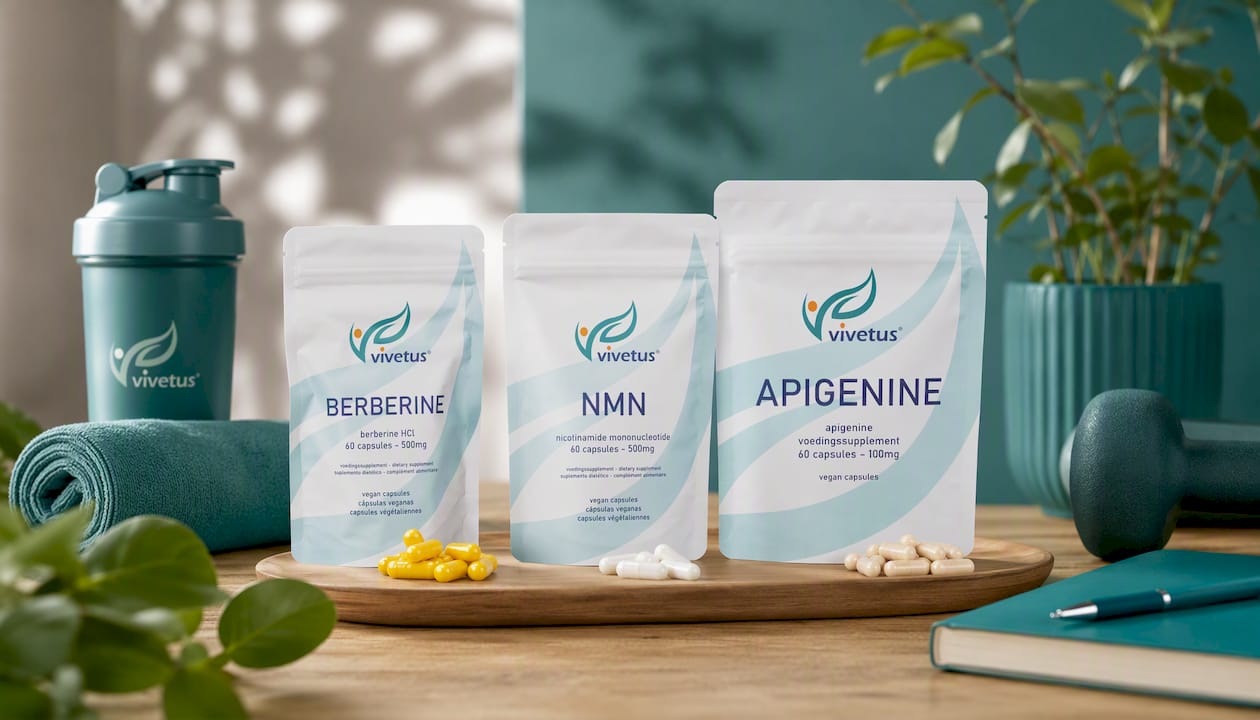
If you’re building a broader metabolic and energy routine, the Energy & Vitality bundel pairs berberine with complementary support without requiring you to research and combine separate products yourself. For those interested in additional longevity-focused compounds, Vivetus® Apigenine, 60 capsules at 100 mg, sits alongside berberine in Vivetus’s wider range of vegan, tested supplements. Every order over €50 ships free, and subscription options are available if you’re planning the 8 to 12 week trial period discussed earlier. Browse the full berberine collection to compare strengths and start your order today.
This article is general information, not a substitute for advice from a qualified doctor. Consult a qualified healthcare professional about your own circumstances before acting on anything here.
Sources
- PubMed: advanced formulation study (berberine pharmacokinetics)
- The effect of berberine supplementation on obesity parameters, inflammation and liver function enzymes: a systematic review and meta-analysis
- NCCIH: Berberine and weight loss — what you need to know
- Clinicaltrials