

Dietary planning workflow for seniors: science-backed steps
TL;DR:
- A five-step dietary planning workflow helps adults over 40 develop a personalized approach to healthy aging through assessment, diet foundation, targeted supplements, safety checks, and ongoing monitoring. Whole-diet strategies outperform single-nutrient fixes for longevity, with supplements serving as specific gap-fillers identified by clinical data. Precision in testing and safety ensures effective, evidence-based nutrition tailored to each individual’s medical history and lifestyle.
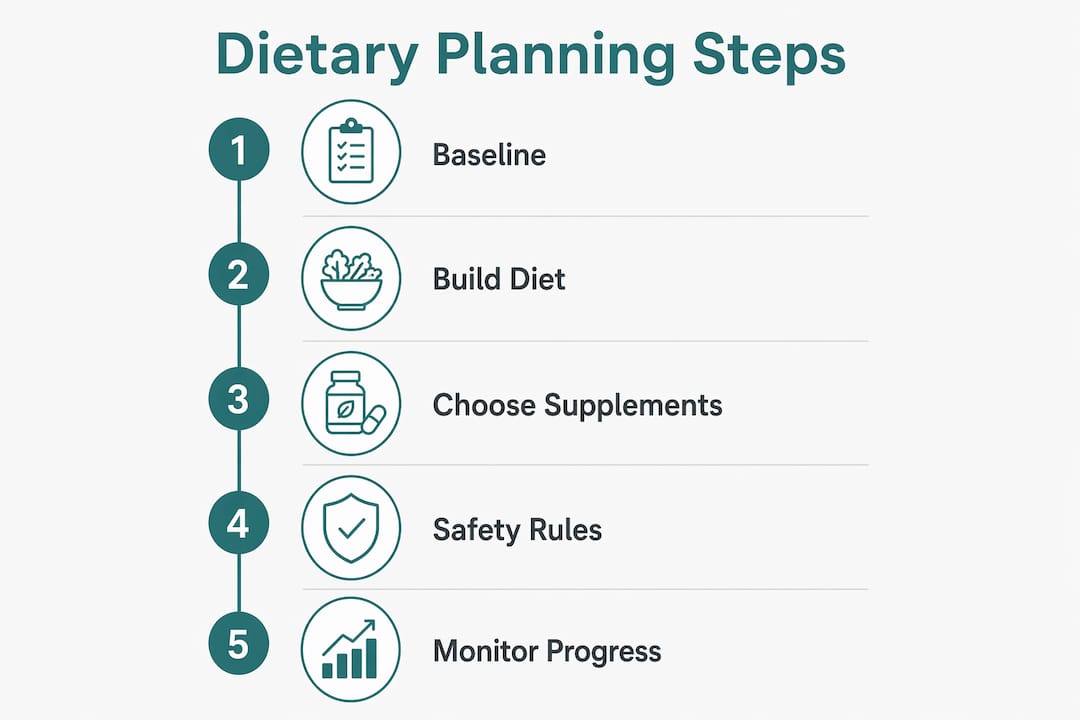
A five-step dietary planning workflow — assessment, dietary foundation, targeted supplementation, safety checks, and monitor and iterate — gives adults 40+ a repeatable path to healthier ageing. The European Commission Joint Research Centre confirms that whole-diet approaches outperform single-nutrient fixes for longevity, while EFSA’s Dietary Reference Values set the tolerable upper intake levels (ULs) that keep supplementation safe. Vivetus stocks clinically-backed supplements designed to fill the gaps this workflow identifies.
Act within the next 72 hours:
- Book a blood test: request 25-OH vitamin D, vitamin B12, and a full metabolic panel from your GP or a private clinic.
- Review your current medicines with a pharmacist for nutrient interactions (warfarin, metformin, statins).
- Check every supplement label for third-party testing certification and declared doses.
- Set a calendar reminder for a 3-month retest.
Table of Contents
- What should you assess before changing your diet or supplements?
- How do you build the right dietary foundation for healthy ageing?
- How do you choose supplements that actually address your gaps?
- What safety rules should you follow with supplements and dosing?
- How do you build a practical weekly meal and supplement schedule?
- How do you monitor progress and know when supplements are working?
- Key takeaways
- Why the conventional wisdom on supplements often gets it backwards
- Vivetus: clinically-backed supplements for adults 40+ in Central Europe
- Further reading and sources
What should you assess before changing your diet or supplements?
A safe, personalised plan starts with data, not guesswork. Gather the following before adjusting anything:
- Medical history: chronic conditions (diabetes, hypertension, renal impairment, osteoporosis) that directly affect nutrient targets.
- Current medicines: prescription and over-the-counter. Medication–food interactions are a frequent safety constraint — warfarin and vitamin K, metformin and B12 absorption, statins and grapefruit are the three most clinically significant.
- Recent lab results: 25-OH vitamin D, serum B12, full metabolic panel, fasting glucose, renal function.
- Weight trend and functional goals: grip strength, balance, cognitive sharpness, energy levels.
Pro Tip: Ask your GP to include serum B12 and 25-OH vitamin D on your next routine blood draw. Both are frequently low in adults over 50 and both are correctable once identified. Consult a clinician before starting any new supplement, particularly if you take prescription medicines.
Nutrition planning for adults 40+ should account for medical history, current medications, and existing dietary patterns to avoid exceeding tolerable upper intake levels.
How do you build the right dietary foundation for healthy ageing?
Adopt a Mediterranean-style whole diet as your baseline. The European Commission JRC identifies this pattern as the gold standard for reducing age-related disease risk, with evidence from both observational studies and controlled trials. For Central Europe, this translates practically: rye bread, oily fish (herring, mackerel, trout), seasonal vegetables, legumes, eggs, dairy, and olive or rapeseed oil.

Frequency strategy: spread intake across three protein-anchored meals plus 2–3 nutrient-dense snacks to support muscle protein synthesis and sustain energy. Protein targets for older adults are generally set to support muscle synthesis, with increased intake recommended during illness or recovery.
Sample day (70 kg adult, ~84 g protein target):
| Meal | Example | Approx. protein |
|---|---|---|
| Breakfast | Porridge with milk, soft-boiled egg | — |
| Mid-morning snack | Greek yoghurt, handful of walnuts | 12 g |
| Lunch | Grilled trout, boiled potatoes, steamed broccoli | — |
| Afternoon snack | Cottage cheese on rye crispbread | 10 g |
| Dinner | Lentil soup with egg, wholegrain roll | — |
Hydration is frequently overlooked. Older adults may require explicit guidance to ensure adequate fluid intake from beverages and hydrating foods, as thirst sensation diminishes with age. For those with chewing or swallowing difficulties, soft proteins (fish, eggs, well-cooked legumes) and soups maintain intake without compromising nutrition.
How do you choose supplements that actually address your gaps?
Use supplements only to fill clinically identified deficiencies or documented dietary shortfalls. The JRC evidence base is clear: supplements are gap-bridges, not food substitutes.
Common age-related gaps to address:
- Vitamin D: 800–2,000 IU/day depending on baseline lab result; confirm with 25-OH vitamin D test. Many Central European adults are deficient through winter months. See Vivetus’s vitamin D guide for seniors for dosing detail.
- Vitamin B12: absorption declines with age and is further reduced by metformin. Sublingual or high-dose oral forms improve uptake. Vivetus’s B vitamin guide covers practical approaches.
- Calcium: prioritise dietary sources (dairy, fortified plant milks, sardines with bones) before supplementing; excess supplemental calcium carries cardiovascular considerations.
- Omega-3 (EPA/DHA): useful when oily fish intake is below two portions per week.
- Advanced longevity ingredients: NMN, resveratrol, fisetin, quercetin, pterostilbene, apigenin, TMG, and berberine are available through Vivetus for adults seeking evidence-informed longevity support beyond basic micronutrient correction.
Trust signals to check on every label:
- Third-party testing certificate (Certificate of Analysis)
- GMP (Good Manufacturing Practice) certification
- Declared doses per serving, not just per container
- Transparent ingredient sourcing
Pro Tip: Start one new supplement at a time and wait four weeks before adding another. This makes it straightforward to attribute any change, positive or negative, to a specific product.
Multivitamin/mineral supplements can help those unable to meet micronutrient needs from food, but evidence of broad health outcome benefits is mixed and excess intake can be harmful without lab monitoring.
What safety rules should you follow with supplements and dosing?
Always calculate total nutrient intake — food, fortified foods, and supplements combined — against EFSA’s tolerable upper intake levels before increasing any dose.
Immediate safety checks:
- Warfarin users: any change to vitamin K intake (from greens or supplements) requires INR monitoring.
- Metformin users: B12 levels need regular checking; supplementation is often warranted.
- Statin users: avoid grapefruit and grapefruit juice regardless of supplement changes.
- Renal impairment: potassium and phosphorus from supplements require clinical sign-off.
- Multivitamin stacking: adding individual nutrients on top of a multivitamin can push fat-soluble vitamins (A, D, E, K) above safe ULs without obvious symptoms.
Route a medicines review with a clinician or pharmacist before starting any new supplement protocol. Keep a written log of every product, dose, and timing. This single habit prevents the majority of adverse interactions.
How do you build a practical weekly meal and supplement schedule?
A repeatable weekly template reduces decision fatigue and keeps adherence high. Batch-cooking two to three protein-anchored meals per week lowers preparation barriers and cuts per-meal cost, particularly useful for single adults or those with limited mobility.
Sample day schedule:
- 07:30 — Breakfast: porridge with milk and soft-boiled egg. Take vitamin D supplement with food (fat aids absorption).
- 10:30 — Mid-morning snack: Greek yoghurt with walnuts. Take B12 supplement if prescribed.
- 13:00 — Lunch: grilled trout, boiled potatoes, steamed seasonal vegetables.
- 16:00 — Afternoon snack: cottage cheese on rye crispbread, glass of water.
- 19:00 — Dinner: lentil soup, wholegrain roll. Take omega-3 with the meal.
- Throughout the day — Target 1.5–2 litres of fluid (water, herbal teas, broth).
Central Europe shopping checklist:
- Oily fish: herring, mackerel, trout (fresh or tinned)
- Eggs, dairy (yoghurt, cottage cheese, kefir)
- Legumes: lentils, chickpeas, white beans
- Seasonal vegetables: cabbage, carrots, beetroot, spinach
- Fortified foods: vitamin D-fortified milk or plant milk, fortified breakfast cereals
- Whole grains: rye bread, oats, buckwheat
- Certified supplement labels with declared doses and COA
For texture difficulties, prioritise fish over meat, use slow-cooked or blended soups, and replace raw salads with steamed or roasted vegetables.
How do you monitor progress and know when supplements are working?
Set specific markers at the start: body weight, grip strength (a reliable proxy for overall muscle health), energy levels, and the lab values identified in your baseline assessment. A structured retest cadence keeps the plan evidence-based.
| Review point | What to check | Typical earliest signal |
|---|---|---|
| 4 weeks | Tolerance, digestion, energy | Subjective energy and sleep quality |
| 3 months | Vitamin D (25-OH), B12, weight | Lab values begin to shift |
| 3–6 months | Grip strength, functional goals | Measurable physical improvement |
| 6–12 months | Full metabolic panel, bone markers | Broad reassessment of the plan |
Monthly supplement budget (Central Europe, approximate ranges):
- Basic multivitamin: €5–€15/month
- Vitamin D (1,000–2,000 IU/day): €5–€12/month
- Omega-3 (EPA/DHA, 1 g/day): €10–€20/month
- Targeted longevity ingredients (NMN, resveratrol, etc.): €25–€60/month
Subscription purchasing typically reduces per-unit cost by 10–20% compared with one-off orders. Buying a 90-day supply at once achieves a similar saving and reduces reorder effort.
Key takeaways
A five-step dietary planning workflow — starting with a clinical baseline assessment and building through a Mediterranean-style diet, targeted supplementation, safety checks, and structured monitoring — gives adults 40+ a repeatable, evidence-based path to healthier ageing.
| Point | Details |
|---|---|
| Start with a baseline assessment | Book 25-OH vitamin D, B12, and a full metabolic panel before changing diet or supplements. |
| Build on a Mediterranean-style diet | Distribute 1.0–1.2 g/kg/day of protein across three meals and 2–3 snacks to support muscle synthesis. |
| Use supplements to fill confirmed gaps | Vitamin D, B12, and omega-3 are the most common deficiencies in Central European adults over 40. |
| Check safety before every new supplement | Calculate total intake against EFSA tolerable upper intake levels and review medicines interactions. |
| Vivetus as a vetted supplier | Vivetus offers purity-tested, clinically-backed supplements with subscription options for Central Europe. |
Why the conventional wisdom on supplements often gets it backwards
Most supplement marketing positions products as the primary intervention, with diet as a secondary consideration. The JRC evidence points in the opposite direction: whole-diet patterns are the primary driver of healthy ageing outcomes, and supplements serve a specific, corrective function. That distinction matters practically because it changes where you spend your attention and your budget.
Adults who build the dietary foundation first, confirm deficiencies through lab tests, and then add targeted supplements tend to use fewer products, at lower doses, with clearer rationale. The workflow in this article reflects that order deliberately. Vivetus’s product range is designed for exactly this use case: clinically-backed ingredients, transparent dosing, and purity testing that lets you supplement with confidence rather than speculation.
The one thing most guides understate is the medicines review. Drug-nutrient interactions are common and clinically meaningful, yet they rarely appear in mainstream supplement advice. Integrating that review early in the workflow is the single highest-leverage safety step available to any adult over 40.
Vivetus: clinically-backed supplements for adults 40+ in Central Europe
Adults following this workflow need a supplier they can trust to deliver what the label states. Vivetus provides purity-tested, vegan dietary supplements, including NMN, resveratrol, fisetin, quercetin, pterostilbene, apigenin, TMG, and berberine, with transparent Certificates of Analysis and GMP certification. Free shipping applies on orders over €50, and subscription purchasing reduces per-unit cost on regular reorders.
For buyers in Central Europe, Vivetus offers a practical alternative to pharmacy shelves: a focused range of longevity-oriented ingredients, clearly dosed, third-party tested, and available with flexible subscription options. Browse the full range and check the nutritional supplements guide to match products to the gaps your baseline assessment identifies. When you are ready to order, visit Vivetus to review current products and subscription pricing.
This article provides general nutritional information, not personalised medical or dietary advice. Confirm current recommendations with a qualified clinician or registered dietitian for your individual situation.
Further reading and sources
- Nutrition and active and healthy ageing — European Commission JRC report
- EFSA Dietary Reference Values summary report
- Nutritional needs of middle-aged and older adults: the European Union perspective
- Nutritional challenges for older adults in Europe — Proceedings of the Nutrition Society
- Nutrition planning supporting healthy ageing: a step-by-step clinical framework
- Vivetus nutritional supplements guide for healthy ageing
- Vivetus balanced diet guide for elderly
Consult a clinician or registered dietitian for personalised advice before making significant changes to your diet or supplement routine.