

Pterostilbeen dosering: hoeveel milligram per dag?
For most healthy adults, the evidence points to a daily pterostilbene dose generally recommended within a moderate range, with a lower starting point suggested before increasing further. This range shows up consistently across the human trials and clinical summaries available, including Orthokennis’s review of common practice, which also notes the compound sits at GRAS status for typical intakes but lacks long-term human safety data beyond a few months.
That last point matters more than it sounds. Short courses look well tolerated, but nobody has run a five-year trial to see what happens with sustained high-dose use.
- Pregnant or breastfeeding women should not take pterostilbene without medical guidance.
- Anyone on blood-sugar or blood-pressure medication needs to check with a clinician first, since interaction data is preliminary but real.
- People with upcoming surgery should stop supplementing at least two weeks beforehand.
Vivetus sells a vegan, third-party tested pterostilbene supplement built around these same evidence-based ranges. If you take other medication or fall into any of the groups above, a quick conversation with your GP or pharmacist before you start is worth the five minutes it takes.
Key Takeaways
Pterostilbene dosing between 50 and 250 mg daily is well supported by human trial data, but long-term safety beyond a few months remains unconfirmed.
| Point | Details |
|---|---|
| Start low, titrate slowly | Begin at 50 to 100 mg daily for one to two weeks before considering an increase. |
| Upper range from trials | Studies such as the 125 mg twice-daily trial support up to 250 mg/day for short-term use. |
| Watch key interactions | Blood-sugar and blood-pressure medication users should consult a clinician before starting. |
| Choose standardised products | Look for trans-pterostilbene, a certificate of analysis, and clear mg-per-capsule labelling. |
| Vivetus offers a tested option | Vivetus’s vegan pterostilbene capsules use standardised dosing in line with the studied 50–250 mg range. |
Table of Contents
- Pterostilbeen dosering in context: what pterostilbene actually is
- Recommended pterostilbene amount: doses used in studies
- Safety, contraindications and medication interactions
- How to take pterostilbene: timing and dose-building
- Choosing a quality pterostilbene supplement
- What the evidence on pterostilbene actually shows
- Our editorial take on pterostilbene dosing
- Where to buy a properly dosed pterostilbene supplement
- Sources
Pterostilbeen dosering in context: what pterostilbene actually is
Pterostilbene is a stilbenoid compound found naturally in blueberries, grapes, and the bark of Pterocarpus marsupium, and it acts in the body as an antioxidant with anti-inflammatory properties. It is structurally close to resveratrol, the polyphenol most people associate with red wine research, but the two compounds behave differently once swallowed.
- Bioavailability: pterostilbene’s extra methyl groups make it more lipophilic than resveratrol, which slows metabolic breakdown and lets more of it cross cell membranes intact, according to Orthokennis.
- Practical effect: this is why dosing comparisons between the two molecules aren’t a simple milligram-for-milligram swap. You can read more detail on that distinction in this comparison of resveratrol and pterostilbene.
- Why people take it: interest centres on cardiometabolic markers, cognitive support, and general healthy-ageing goals, though none of these are settled outcomes and should be treated as areas of ongoing research rather than guarantees.
The Dutch Wikipedia entry on pterostilbeen covers the plant sources and basic chemistry if you want a quick primer before digging into dosing specifics.
Recommended pterostilbene amount: doses used in studies
The consensus across clinical literature and expert summaries suggests a moderate daily dose range, with many protocols starting participants at the lower end. Orthokennis frames this as the practical range for healthy adults, and it lines up with how most commercial capsules are formulated.
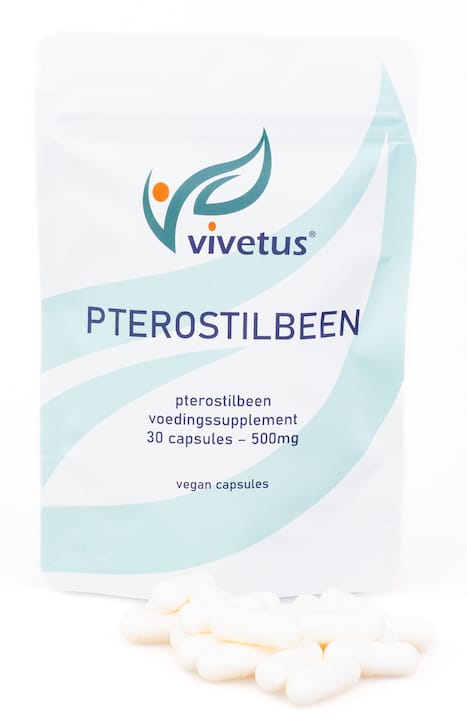
One human trial indexed on PubMed used a regimen of 125 mg twice daily, amounting to 250 mg total, and reported tolerability alongside some biomarker changes over the study period. That’s a useful data point, but it’s a single trial with a relatively short follow-up, not a settled clinical guideline. A broader review on PubMed Central makes a similar point: the pharmacology is well described, but the human evidence base is still modest in both size and duration.
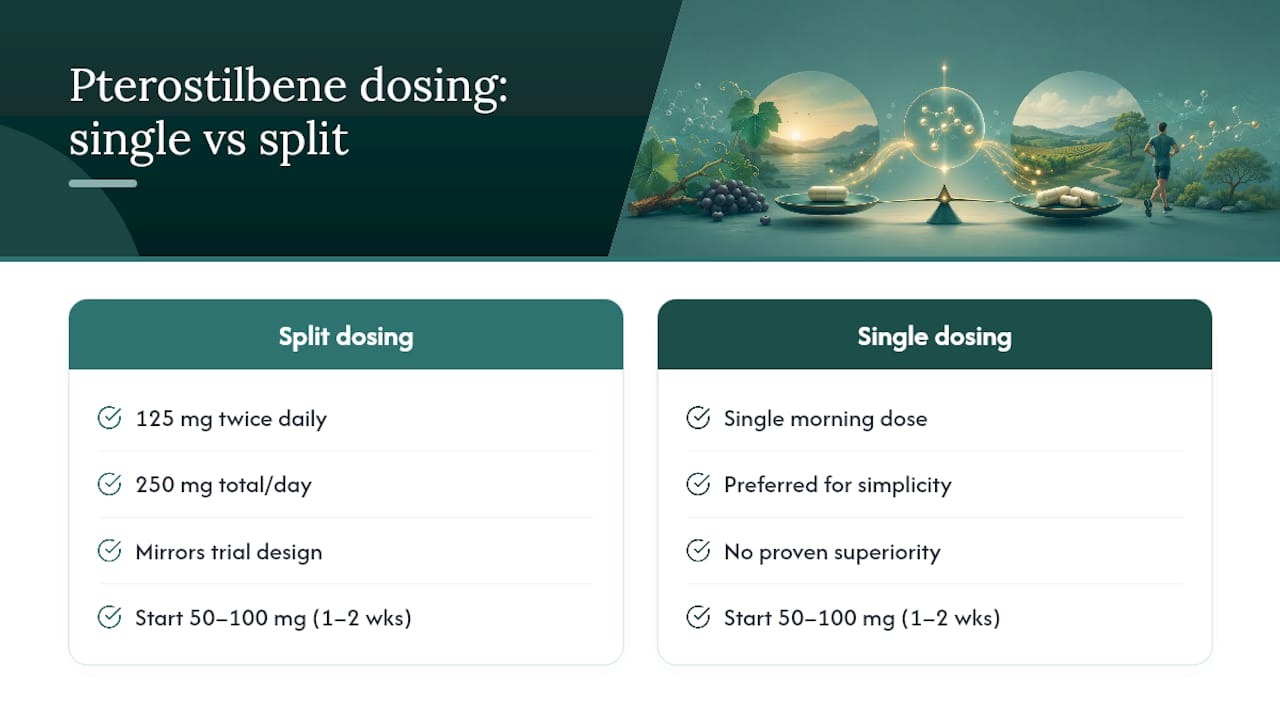
Here’s how that translates into actual capsules:
Some people split their daily amount into two doses, morning and evening, mirroring the twice-daily trial design mentioned above. Others prefer a single morning dose for simplicity. Neither approach has been shown to be clearly superior for general use, so convenience is a reasonable deciding factor.
Pro Tip: Start at 50 to 100 mg for the first one to two weeks and pay attention to how you feel before increasing. If you’re tracking blood glucose or blood pressure as part of a health plan, note your baseline readings before you start so any changes are easier to spot.
Safety, contraindications and medication interactions
Pterostilbene isn’t right for everyone, and the caution list is short but firm. Pregnant women, breastfeeding mothers, and children should avoid supplementing without direct medical oversight, since none of the available trials included these groups. People with uncontrolled chronic conditions, such as poorly managed diabetes or cardiovascular disease, also fall into the “ask first” category.
The interaction risks worth knowing about:
- Blood-sugar lowering medication — some research flags a theoretical additive effect on glucose metabolism, which could increase the risk of hypoglycaemia when combined with antidiabetic drugs, per PubMed-indexed findings.
- Antihypertensive drugs — limited data suggest a possible interaction with blood pressure control, warranting monitoring if you’re on regular medication.
- Hepatic metabolism — because pterostilbene is processed by the liver, it may influence how other drugs metabolised through the same pathways behave, though this remains an area with more theory than direct clinical proof.
A short monitoring checklist if you decide to proceed:
- Watch for unusual fatigue, dizziness, or signs of low blood sugar in the first few weeks.
- Recheck relevant blood markers (glucose, liver enzymes) if you’re on long-term medication and plan to supplement for more than a few months.
- Stop and speak to your doctor if you notice unexpected bruising, gastrointestinal upset that doesn’t settle, or any new symptom that coincides with starting the supplement.
Roughly one in a handful of reviewed studies explicitly flags the shortage of long-term human safety data as a limitation, which is exactly why conservative dosing and periodic check-ins with a clinician make sense for anyone using pterostilbene beyond a few months.
Pro Tip: If you have planned surgery, stop taking pterostilbene at least two weeks in advance. This is standard precautionary practice for supplements with potential effects on blood clotting or metabolism, even where the evidence is more theoretical than proven.
How to take pterostilbene: timing and dose-building
Getting the timing right isn’t complicated, but a few small habits make a real difference to how consistently you take it and how well your body absorbs it.
- Start low. Begin with 50 to 100 mg daily for one to two weeks and note how you respond.
- Take it with a meal containing some fat. Pterostilbene is fat-soluble, so pairing it with breakfast or dinner rather than on an empty stomach supports better absorption.
- Reassess after two weeks. If you tolerate the starting dose well and want to continue, you can increase gradually towards the 250 mg upper range used in trials, ideally under guidance if you’re managing a health condition.
- Choose single or split dosing based on convenience. A single morning capsule suits most people; splitting into two smaller doses across the day mirrors the twice-daily protocol used in the 125 mg trial and may suit those who prefer steadier levels.
- Count capsules against your target, not just the bottle’s suggested serving. A 100 mg capsule taken twice daily reaches 200 mg, comfortably within range; three of the same capsule would push you to 300 mg, above what most studies have tested.
Pro Tip: Taking your capsule alongside a meal that includes eggs, nuts, or olive oil not only helps absorption but tends to reduce the mild stomach upset some people report when taking stilbenoid supplements on an empty stomach.
Choosing a quality pterostilbene supplement
Not all capsules labelled “pterostilbene” are equal, and the difference often comes down to details most people skip past on the label.
- Look for standardised trans-pterostilbene. This is the studied, active form of the molecule; vague ingredient descriptions without this specification are a red flag.
- Check for a certificate of analysis. Reputable brands test batches for purity and heavy metals and make that documentation available.
- Confirm clear mg-per-capsule labelling. You need to know exactly how much you’re taking to stay within the 50 to 250 mg range discussed above.
- Understand what you’re buying: standalone versus blend. A blended longevity formula containing pterostilbene alongside other ingredients makes dose-counting harder than a standalone capsule with a fixed mg amount.
- Be wary of unrealistic marketing claims. Products promising dramatic effects at doses far outside the studied range deserve scepticism rather than trust.
Vivetus formulates its pterostilbene collection around these exact principles: standardised trans-pterostilbene, vegan capsules, and batch testing, so the milligram figure on the label is the milligram figure you’re actually getting. Roughly a handful of the clinical trials reviewed by Orthokennis specifically call out dosing consistency as a factor in why some study results vary, which makes label accuracy more than a cosmetic detail.
What the evidence on pterostilbene actually shows
The human evidence base is real but still developing. A trial using 125 mg twice daily reported that participants tolerated the dose well over the study period, with some biomarker shifts noted, though the sample size and duration weren’t large enough to draw firm conclusions about long-term outcomes. A wider pharmacological review covering both preclinical and human data reaches a similar verdict: the mechanisms are well mapped, but robust, large-scale human trials remain thin on the ground.
| Study type | Typical dose used | What it tells us |
|---|---|---|
| Human trial (short-term) | 125 mg twice daily | Tolerability confirmed; biomarker changes reported but not conclusive |
| Preclinical/animal studies | Often higher than human ranges | Mechanistic insight only; doses don’t translate directly to people |
| Expert practice summaries | 50–250 mg/day | Reflects common real-world dosing based on available human data |
- Animal studies frequently use doses well above what’s practical or tested in humans, so extrapolating those numbers to a daily supplement routine isn’t appropriate.
- The interaction findings on metabolic pathways reinforce why caution around blood-sugar medication isn’t just theoretical box-ticking.
- Long-term human safety data, covering years rather than weeks, simply doesn’t exist yet, which is the single biggest gap in the current picture.
Our editorial take on pterostilbene dosing
Most articles on pterostilbene dosing repeat a commonly referenced dose range without detailing the origins or basis of that range. The honest answer is that it’s built on a handful of modest human trials and a much larger body of preclinical work that can’t be applied to people directly. That doesn’t make the range wrong. It makes it a reasonable, evidence-informed starting point rather than a settled prescription.
What gets underestimated is how much individual variation matters here. Body weight, age, existing medication, and even what else you’re supplementing with can shift how you respond to a given dose. A 50 mg starting point for one person might be plenty; another might tolerate and benefit from closer to 200 mg. There’s no shortcut around starting conservatively and paying attention, and anyone who tells you there’s a single perfect number for every adult is oversimplifying a genuinely nuanced picture.
Vivetus builds its pterostilbene formulation with this uncertainty in mind: standardised trans-pterostilbene, transparent labelling, and dosing guidance that mirrors the ranges seen in actual clinical research rather than marketing-driven high-dose claims. If you’re on medication, pregnant, or navigating a chronic condition, use the product information as a starting point for a conversation with your clinician, not a substitute for one.
Where to buy a properly dosed pterostilbene supplement
Getting the dosing right only matters if the capsule you’re taking actually contains what the label says. Vivetus’s pterostilbene supplement is formulated as a vegan capsule with a clearly stated milligram strength per dose, built around the same 50 to 250 mg research range covered throughout this guide, and produced with third-party testing for purity.
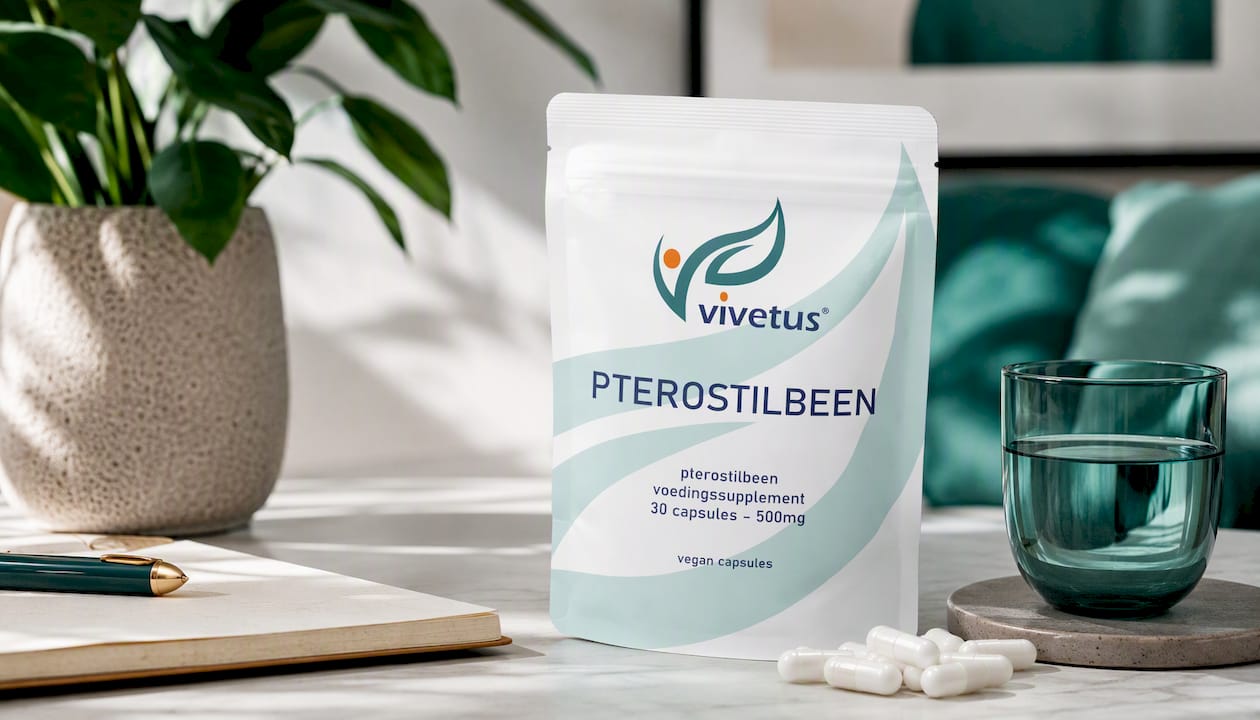
That combination matters more than it might seem: a supplement that’s vague about its trans-pterostilbene content or skips purity testing leaves you guessing exactly how much active compound you’re taking, which defeats the point of following a careful dosing plan in the first place. Vivetus’s approach removes that guesswork by keeping the formulation standardised and the label accurate to what’s inside.
If you’re ready to start, visit the Vivetus pterostilbene product page to check current capsule strength and formulation details. Stick to the ranges discussed here, don’t exceed 250 mg daily without clinical guidance, and if you’re pregnant, breastfeeding, or on regular medication, speak with your doctor or pharmacist before adding it to your routine.