

The role of dietary fiber in health and longevity
TL;DR:
- Dietary fiber is essential for gut health, reducing chronic disease risk through various mechanisms. Consuming a diverse range of fiber types from whole plant foods supports microbiota, improves bowel function, and promotes longevity. Increasing intake gradually while staying hydrated optimizes health benefits and minimizes digestive discomfort.
Dietary fiber is defined as the indigestible plant material that passes through the human digestive system, feeding gut bacteria, regulating bowel function, and reducing the risk of chronic disease. The European Food Safety Authority (EFSA) recommends at least 25 grams of fiber daily for normal bowel function, with research suggesting 35–40 grams per day maximises long-term disease prevention. Most adults in Western populations fall well short of this target. The role of dietary fiber extends far beyond simple digestion: adequate intake is linked to lower rates of cardiovascular disease, type 2 diabetes, colorectal cancer, and all-cause mortality. Understanding what fiber does, and how to get enough of it, is one of the most practical steps you can take for your health.
What is the role of dietary fiber in digestive health?
Dietary fiber supports digestive health through two distinct mechanisms: physical bulking and microbial fermentation. These are not interchangeable effects. They depend on the type of fiber consumed and the composition of your gut microbiota.
The physical role is straightforward. Insoluble fiber, found in wheat bran, wholegrain cereals, and the skins of vegetables, adds bulk to stool and accelerates its passage through the colon. This reduces the time that potentially harmful compounds spend in contact with the gut wall. The result is more regular bowel movements and a lower risk of constipation.
Fermentable fibers work differently. Gut bacteria break them down in the large intestine, producing short-chain fatty acids (SCFAs), particularly butyrate, acetate, and propionate. Butyrate is the primary energy source for colonocytes, the cells lining the colon. It also carries anti-inflammatory properties and strengthens the gut barrier, reducing intestinal permeability. A compromised gut barrier is associated with systemic inflammation and a range of chronic conditions.
The modulation of gut microbiota is where fiber’s effects become genuinely far-reaching. Fiber intake improves mental well-being via the gut-brain axis, influencing mood through prebiotic effects on beneficial bacterial populations. This is not a minor footnote. It means that what you eat for breakfast can, over time, affect how you feel mentally.
- Insoluble fiber (wheat bran, vegetable skins): bulks stool, speeds transit, reduces constipation.
- Soluble fermentable fiber (oats, legumes, chicory root): feeds beneficial bacteria, drives SCFA production.
- Gel-forming fiber (psyllium): normalises stool consistency, useful for both constipation and diarrhoea in people with irritable bowel syndrome (IBS).
- Prebiotic fiber (inulin, fructooligosaccharides): selectively feeds Bifidobacterium and Lactobacillus species, improving microbial diversity.
Pro Tip: If you experience bloating after adding fiber, the issue is often speed, not the fiber itself. Slow increases allow your gut bacteria to adapt without producing excess gas.
What types of dietary fiber exist, and why do the differences matter?
The classic soluble versus insoluble classification is a useful starting point, but it does not capture the full picture. Professor Hannah Holscher highlights that fiber’s physical characteristics, including fermentability, viscosity, and gel-forming capacity, determine its health effects more accurately than solubility alone. Two fibers can both be “soluble” yet behave completely differently in the gut.
Viscous soluble fibers, such as beta-glucans found in oats and barley, form a thick gel in the small intestine. This gel slows gastric emptying and reduces the rate at which glucose and cholesterol enter the bloodstream. Regular consumption of beta-glucans lowers LDL cholesterol and improves glycaemic control in people with insulin resistance and type 2 diabetes. The mechanism is physical, not biochemical: the gel simply delays absorption.
Non-viscous fermentable fibers, such as inulin and pectin, do not form gels but are rapidly fermented by gut bacteria. Their primary benefit is microbial: they increase bacterial diversity and SCFA production. Their effect on blood glucose is minimal compared to beta-glucans.
| Fiber type | Key sources | Primary health effect |
|---|---|---|
| Viscous soluble (e.g. beta-glucan) | Oats, barley, rye | Lowers LDL cholesterol, improves blood glucose |
| Fermentable prebiotic | Chicory, garlic, onions, legumes | Feeds beneficial bacteria, increases SCFA production |
| Insoluble (non-fermentable) | Wheat bran, wholegrain cereals | Bulks stool, speeds colonic transit |
| Gel-forming (psyllium) | Psyllium husk | Normalises stool consistency, manages IBS symptoms |
| Mixed (pectin) | Apples, citrus peel | Fermentable and mildly viscous; supports microbiota and cholesterol |
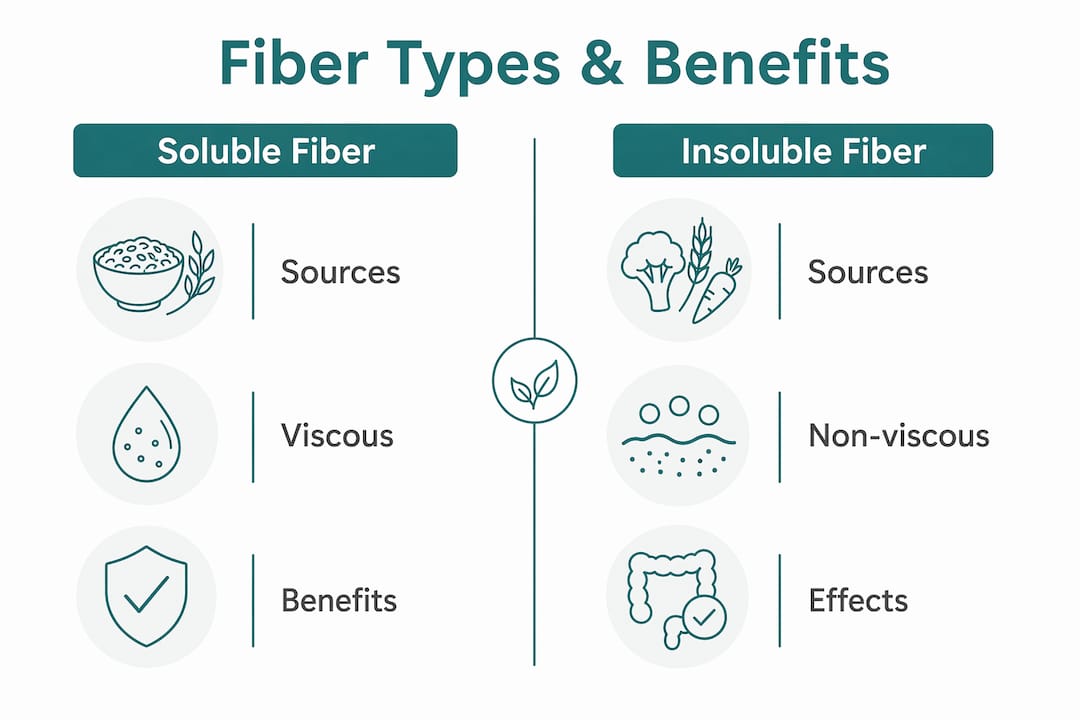
The practical implication is clear: eating a variety of fiber-rich foods matters more than focusing on a single source. Each fiber type contributes something distinct. A diet built around oats alone will not deliver the microbial diversity benefits of legumes, nor the transit benefits of wheat bran.
Fiber-rich whole plant foods provide a complex matrix of polyphenols, vitamins, and fiber working together for chronic disease protection. Isolated fiber supplements cannot replicate this. Cara Wheatley-McGrain notes that overreliance on supplements misses the synergistic effects that whole foods deliver.
How much fiber do you need, and how do you increase intake safely?
EFSA sets the adult daily fiber target at a minimum of 25 grams, with optimal benefits at 30–40 grams per day. Most adults in the UK and across Europe consume considerably less. Closing this gap requires a deliberate approach, particularly if your current intake is low.
The most common mistake is increasing fiber intake too quickly. Rapid increases cause bloating, cramps, and excess gas because gut bacteria need time to adapt to a new substrate supply. The recommended approach is gradual.
- Start with an honest baseline. Track your current fiber intake for three days using a food diary. Most people are surprised by how low it is.
- Add approximately 5 grams per week. This gives your microbiota time to adjust without producing uncomfortable symptoms.
- Prioritise whole food sources first. Add a portion of legumes (lentils, chickpeas, or kidney beans) to one meal per day. One 80-gram serving of cooked lentils provides roughly 4 grams of fiber.
- Include a variety of plant types. Rotate between oats, vegetables, fruit, nuts, seeds, and wholegrains across the week to cover different fiber types.
- Drink at least 2 litres of water daily. Adequate hydration is critical to fiber’s bowel effects. Without sufficient water, high fiber intake can worsen constipation rather than relieve it.
- Add psyllium husk if needed. Psyllium is a practical, well-tolerated supplement for people who struggle to reach targets through food alone. Its gel-forming properties make it effective for both constipation and loose stools.
Pro Tip: Swap white rice for cooked lentils two or three times a week. This single change can add 8–12 grams of fiber to your weekly intake with minimal effort.
How does dietary fiber reduce the risk of chronic disease?
Dietary fiber reduces chronic disease risk through several distinct pathways: satiety, blood glucose regulation, cholesterol reduction, and direct anti-inflammatory effects in the colon. These are not theoretical associations. They are supported by large-scale epidemiological data and meta-analyses.
The satiety effect is well established. Fiber slows gastric emptying and increases the volume of food in the stomach, triggering fullness signals earlier in a meal. People who eat high-fiber diets consistently report lower overall calorie intake without deliberate restriction. This makes fiber one of the most practical tools for weight management.
The disease risk data is striking. Increasing fiber intake by 10 grams per day reduces colorectal cancer risk by 10%, cardiovascular disease risk by 15–30%, and overall mortality by 10–15%. These are not marginal gains. A 10-gram increase is achievable by adding one serving of oats at breakfast and a portion of legumes at lunch.
- Colorectal cancer: Fiber reduces transit time and dilutes carcinogens in the colon. Butyrate also promotes healthy cell turnover in the gut lining.
- Cardiovascular disease: Viscous fibers lower LDL cholesterol. Fermentable fibers reduce systemic inflammation via SCFA production.
- Type 2 diabetes: Fiber slows glucose absorption, reducing post-meal blood sugar spikes and improving insulin sensitivity over time.
- All-cause mortality: Higher natural fiber intake is linked to roughly one-third lower all-cause mortality compared with low fiber intake, based on NHANES analysis published in 2025.
A paradigm shift is underway in nutritional science, recognising dietary fiber as an essential nutrient for longevity rather than simply a digestive aid. The evidence now places fiber alongside vitamins and minerals in terms of its systemic importance. For readers interested in how fiber fits within broader longevity nutrition, the connection between fiber and healthy ageing is well supported by current research.
Key takeaways
Dietary fiber is one of the most evidence-backed dietary components for reducing chronic disease risk, improving gut health, and supporting healthy weight management.
| Point | Details |
|---|---|
| Daily fiber target | EFSA recommends at least 25 grams daily; 35–40 grams maximises long-term disease prevention. |
| Fiber type diversity | Different fiber types (viscous, fermentable, insoluble) deliver distinct benefits; variety matters more than volume alone. |
| Safe intake increases | Add roughly 5 grams per week and drink at least 2 litres of water daily to avoid digestive discomfort. |
| Disease risk reduction | A 10-gram daily increase in fiber intake reduces colorectal cancer risk by 10% and cardiovascular disease risk by 15–30%. |
| Whole foods over supplements | Whole plant foods deliver fiber alongside polyphenols and vitamins that supplements cannot replicate. |
Why I think we have been thinking about fiber all wrong
For years, the conversation around fiber was almost entirely about constipation. Eat more bran, drink more water, move on. That framing undersold fiber so dramatically that most people still treat it as a minor dietary footnote rather than a central pillar of long-term health.
What has shifted my thinking is the microbiota research. The beneficial effects of fiber depend on personalised interactions with the gut microbiome rather than a one-size-fits-all response. Two people eating identical amounts of the same fiber can have measurably different outcomes based on their microbial composition. That is a genuinely new idea, and it changes how I think about dietary advice.
The practical lesson I draw from this is to prioritise variety over quantity. Rotating between lentils, oats, apples, chicory, and wholegrains across the week exposes your gut bacteria to a broader range of substrates than eating the same high-fiber food every day. Monitoring your own response, particularly bloating patterns and stool consistency, tells you more about what your microbiome needs than any generic recommendation.
I am also sceptical of the supplement-first approach. Psyllium has its place, particularly for people with IBS, but reaching for a fiber supplement before addressing the overall quality of your diet misses the point. The polyphenols, vitamins, and phytonutrients in whole plant foods are not incidental. They are part of why anti-ageing nutrition research consistently points back to whole food patterns rather than isolated nutrients. Fiber is most powerful when it arrives in context.
— Jord
Supporting your vitality alongside a fiber-rich diet
A high-fiber diet lays a strong nutritional foundation, but it works best as part of a broader approach to health and energy. Vivetus offers an Energy & Vitality bundle formulated to complement the kind of nutrient-dense, plant-forward lifestyle that high fiber intake supports. The bundle is designed for people who take their long-term well-being seriously and want targeted nutritional support alongside their dietary choices.
Vivetus ships internationally with free delivery on orders over €50, making it straightforward to add quality supplementation to your routine without compromise.
FAQ
What does dietary fiber do for the body?
Dietary fiber supports bowel regularity, feeds beneficial gut bacteria, lowers LDL cholesterol, slows glucose absorption, and reduces the risk of colorectal cancer and cardiovascular disease. Its effects span digestive, metabolic, and immune health.
How does fiber aid digestion specifically?
Insoluble fiber bulks stool and speeds its passage through the colon, while fermentable fiber feeds gut bacteria that produce butyrate, a compound that strengthens the gut lining and reduces inflammation.
What are the best fiber-rich foods to eat daily?
Legumes (lentils, chickpeas, kidney beans), oats, wholegrains, vegetables, fruit, nuts, and seeds are the most effective sources. Rotating between these types covers the full range of fiber properties your gut needs.
How quickly should I increase my fiber intake?
Add approximately 5 grams per week and drink at least 2 litres of water daily. Rapid increases cause bloating and cramps because gut bacteria need time to adapt to higher substrate availability.
Can fiber intake affect mental health?
Fiber intake supports mental well-being via the gut-brain axis, with prebiotic effects on gut bacteria influencing mood-related signalling pathways. This is an active area of research with growing clinical support.