

Vitamin selection guide for adults: choose wisely
TL;DR:
- A vitamin selection guide helps adults choose supplements based on personal needs and product quality. It emphasizes assessing deficiencies with blood tests, reading labels carefully, and verifying ingredients and batch quality before use. Proper timing, storage, and regular review ensure safe, effective supplementation aligned with evolving health goals.
A vitamin selection guide is a practical framework for choosing supplements that genuinely support your health, rather than wasting money on products that underdeliver or, worse, cause harm. The supplement market is vast and largely self-regulated, which means the burden of quality assessment falls on you. Approximately 33% of controlled supplement samples are rejected for poor labelling or misleading claims. That figure alone makes a clear case for approaching nutritional supplement selection with rigour and scepticism. This guide gives you the criteria to do exactly that.
What does a vitamin selection guide actually cover?
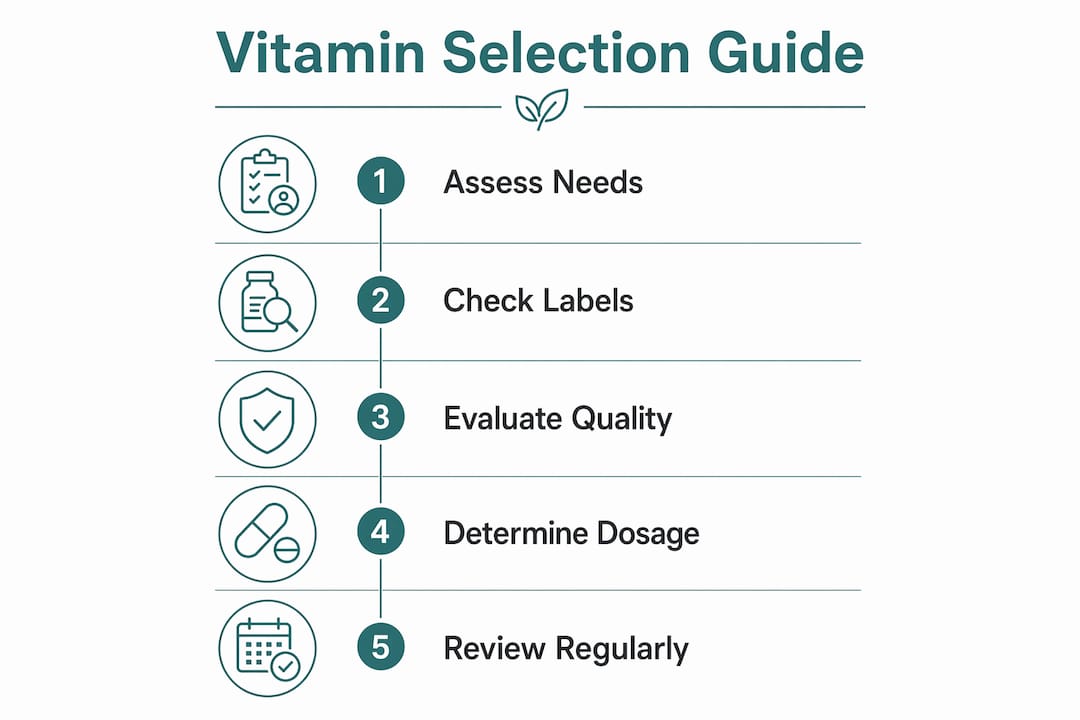
A sound vitamin supplements guide addresses three things: identifying your personal needs, evaluating product quality, and using supplements correctly. Most adults skip the first step entirely and go straight to buying. That shortcut produces cluttered bathroom cabinets and little measurable benefit. The sections below work through each stage in order, so your choices are grounded in evidence rather than marketing copy.
How do you assess your personal vitamin needs?

The starting point for any supplement decision is an honest assessment of your diet and lifestyle. Supplements fill nutritional gaps identified through professional consultation. They do not replace a balanced diet, and no capsule compensates for consistently poor eating habits.
Several life stages and circumstances genuinely increase the risk of deficiency:
- Vegan and plant-based diets: Vitamin B12 is found almost exclusively in animal products. People following a vegan diet require B12 supplementation without exception.
- Adults over 60: Absorption of vitamin D, B12, and calcium declines with age. Older adults are among the groups most likely to benefit from targeted supplementation.
- Limited sun exposure: Vitamin D synthesis depends on UVB light. Adults living in northern climates or spending most of their time indoors are at high risk of deficiency.
- High-performance athletes: Intense training increases demand for magnesium, iron, and B vitamins. Dietary intake alone often cannot keep pace.
- Pregnancy and breastfeeding: Folate, iron, and iodine requirements rise significantly. Medical guidance is non-negotiable at this stage.
A GP or registered dietitian can order blood tests to confirm deficiencies before you spend money on supplements. Self-assessment tools such as symptom checklists or online nutrition quizzes offer a useful starting point, but they do not replace clinical testing. Fatigue, brittle nails, and poor concentration are common symptoms of micronutrient shortfalls, yet they overlap with dozens of other conditions. Guessing is not a strategy.
Pro Tip: Before buying any supplement, write down what you actually eat in a typical week. Gaps become obvious quickly, and you may find you need far fewer products than the market suggests.
What should you look for on supplement labels?
Label literacy is the single most practical skill in any vitamin buying guide. Bioavailable chemical forms of vitamins and minerals are more effective but more expensive. Cheap supplements routinely use poorly absorbed forms to cut costs.
Chemical forms that matter
The form of a nutrient determines how much your body actually absorbs. Magnesium bisglycinate absorbs far more readily than magnesium oxide. Methylcobalamin (a methylated B12) outperforms cyanocobalamin for people with certain genetic variants. Vitamin D3 (cholecalciferol) is the preferred form over D2 for raising blood levels. When you read a label, look past the headline nutrient and check the form listed in brackets.
Dosage and serving size
Serving size information is frequently misleading. A label may show an impressive total dose, but the serving size might be four capsules taken twice daily. Calculate the actual daily intake you would realistically take, then compare it against established reference values such as the EU Nutrient Reference Values (NRVs).
Red flags to avoid
| Warning sign | What it signals |
|---|---|
| Proprietary blend with no individual doses | You cannot verify how much of each ingredient you are getting |
| Megadoses far above NRV | Higher is not always safer; fat-soluble vitamins accumulate |
| Unverified health claims | Claims without cited evidence are a marketing tactic |
| No batch number or expiry date | Poor manufacturing standards |
| No contact details for the manufacturer | Difficult to verify origin or accountability |
Calculating price per serving and checking for a Certificate of Analysis (COA) are critical steps for choosing quality supplements. A COA is a document from an independent laboratory confirming that a specific batch matches its label. It is the most reliable quality signal available to consumers. Ask the brand for one before purchasing, or check whether it is published on their website.
GMP certification relates to the manufacturing process, not to the content quality or safety of a specific batch. A GMP label confirms that a facility follows good manufacturing practices. It does not confirm that the product in your hand is pure or correctly dosed. COA documentation fills that gap.
Pro Tip: Search the brand name plus “Certificate of Analysis” before you buy. Reputable manufacturers publish COAs openly. If you cannot find one, that tells you something important.
Unverified online supplements can contain heavy metals or unauthorised ingredients. Purchasing from established retailers with transparent supply chains reduces this risk considerably. Learning how to read supplement labels in detail is time well spent before committing to any product.
How do you choose vitamins based on your health goals?
Matching a supplement to a specific health goal prevents the common mistake of buying a broad multivitamin and hoping for the best. The best vitamins for health are the ones that address a confirmed gap or a clearly defined objective.
- Immune support: Vitamin C, vitamin D3, and zinc are the most studied nutrients for immune function. Vitamin D3 is particularly relevant for adults in northern Europe who have limited sun exposure between october and march.
- Energy and vitality: B vitamins (particularly B12 and B6), iron, and magnesium support energy metabolism at the cellular level. Fatigue that persists despite adequate sleep often points to one of these deficiencies.
- Healthy ageing: Vitamin D3 combined with vitamin K2 supports bone density. Omega-3 fatty acids are associated with cardiovascular and cognitive health. Antioxidants such as vitamin E and selenium help manage oxidative stress.
- Cognitive function: B12, folate, and omega-3 DHA are the most evidence-backed nutrients for brain health in adults over 50.
- Muscle and joint health: Magnesium, collagen peptides, and vitamin C each play a role in connective tissue maintenance and muscle recovery.
Broad-spectrum versus targeted supplements
A broad-spectrum multivitamin suits adults with generally good diets who want a nutritional safety net. A targeted supplement suits adults with a confirmed deficiency or a specific health goal. Using both simultaneously risks exceeding safe upper limits for fat-soluble vitamins such as A, D, E, and K, which accumulate in body tissue rather than being excreted.
Timing and absorption
Vitamin D, A, E, and K require fat for absorption. Take fat-soluble vitamins with a meal that contains some dietary fat. Iron absorbs best on an empty stomach but causes nausea in many people. Separating iron from coffee, tea, and calcium by at least two hours improves uptake significantly. B vitamins are water-soluble and can be taken at any time, though taking them in the morning avoids any potential interference with sleep.
Pro Tip: Set a phone reminder for the same time each day. Consistency matters more than perfect timing. A supplement taken daily at a slightly suboptimal time outperforms one taken sporadically at the ideal time.
How do you integrate supplements safely into your daily routine?
Safe supplementation requires more than choosing the right product. Usage habits, storage, and monitoring all affect outcomes. The guide to safe and effective supplement use covers this in full, but the core principles are straightforward.
- Store correctly: Most supplements degrade in heat, humidity, and direct light. A cool, dry cupboard away from the bathroom is preferable to a medicine cabinet above the sink.
- Follow the stated dose: Exceeding the recommended dose does not accelerate results. For fat-soluble vitamins, it creates a genuine accumulation risk.
- Inform your GP: Several supplements interact with common medications. Vitamin K affects blood-thinning drugs. St John’s Wort reduces the effectiveness of certain antidepressants and contraceptives. Always disclose your supplement use at medical appointments.
- Monitor your response: Keep a simple log of energy levels, sleep quality, and any physical changes for the first 8–12 weeks. If you notice no change, revisit your choice of product and form.
- Recognise adverse reactions: Nausea, headaches, or skin reactions after starting a new supplement warrant stopping the product and consulting a health professional.
“Consumers must remain vigilant and critically assess product information due to regulatory gaps. Supplements enter the market without official pre-market approval, which means safety verification is the consumer’s responsibility, not the manufacturer’s.”
Reviewing your supplement regimen every six months keeps it aligned with your current health status. Needs change with age, season, and lifestyle. A supplement that was appropriate two years ago may no longer be necessary or may need a dosage adjustment.
Key takeaways
Choosing supplements effectively requires assessing your needs first, then evaluating product quality through COA documentation, bioavailable ingredient forms, and accurate label reading, before integrating them into a consistent daily routine.
| Point | Details |
|---|---|
| Assess needs before buying | Confirm deficiencies through diet review or blood tests before selecting any supplement. |
| Prioritise bioavailable forms | Choose methylated B vitamins, D3, and chelated minerals over cheaper, poorly absorbed alternatives. |
| Verify with a COA | Request a Certificate of Analysis to confirm batch-specific purity and accurate labelling. |
| Time intake correctly | Take fat-soluble vitamins with food containing fat; separate iron from calcium and caffeine. |
| Review every six months | Nutritional needs shift with age and lifestyle, so reassess your regimen regularly. |
What I have learnt from years of watching people supplement badly
Most adults I encounter approach supplementation backwards. They start with a product they saw advertised, then work backwards to justify why they might need it. The result is a collection of supplements with overlapping ingredients, no clear purpose, and no way to measure whether any of them are working.
The most common misconception I see is that more supplements equal better health. The opposite is often true. A single, well-chosen, high-quality supplement taken consistently produces more measurable benefit than six mediocre products taken sporadically. Quality over quantity is not a cliché here. It is the defining principle.
I have also noticed that adults tend to underestimate how much their absorption varies. Two people taking the same vitamin D3 capsule can end up with very different blood levels, depending on their body weight, gut health, and whether they took it with fat. This is why monitoring matters. A blood test after three months of supplementation tells you whether the product is actually working for your body.
The other thing worth saying plainly: no supplement fixes a poor diet. Whole foods provide fibre, phytonutrients, and nutrient cofactors that capsules cannot replicate. Supplements are a complement to good nutrition, not a substitute for it. Adults who use them as a shortcut consistently report less benefit than those who treat them as a targeted addition to an already reasonable diet.
Reassess regularly. What you needed at 40 is not what you need at 55. The adults who get the most from supplementation are the ones who treat it as an ongoing, evidence-based practice rather than a one-time purchase decision.
— Jord
Vivetus energy and vitality: supplements built on quality
Vivetus formulates its supplements for adults who take their health seriously and want products that meet the quality criteria outlined above. Every product in the Energy & Vitality bundle is built around bioavailable ingredient forms and transparent labelling, so you can verify what you are taking and why.

Vivetus ships internationally with free delivery on orders over €50, making it straightforward to maintain a consistent supplement routine without repeated small purchases. If you are ready to match your supplement choices to your actual health goals, the Vivetus range gives you a clear, science-backed starting point. Browse the full selection at vivetus.eu and find the products that fit your needs.
FAQ
What is a vitamin selection guide?
A vitamin selection guide is a structured framework for choosing supplements based on personal nutritional needs, product quality indicators, and safe usage practices. It helps adults avoid wasting money on unnecessary or low-quality products.
How do I know which vitamins I actually need?
A blood test ordered by your GP is the most reliable way to identify deficiencies. Common shortfalls in adults include vitamin D, B12, magnesium, and iron, particularly in those with restricted diets or limited sun exposure.
What does a Certificate of Analysis (COA) confirm?
A COA is an independent laboratory report confirming that a specific supplement batch matches its label for ingredient content and purity. It is the strongest quality signal available to consumers and should be requested before purchasing any supplement.
Are multivitamins a good starting point for adults?
A broad-spectrum multivitamin suits adults with generally good diets who want a basic nutritional safety net. Adults with confirmed deficiencies or specific health goals benefit more from targeted, single-nutrient supplements at clinically relevant doses.
Can I take multiple supplements at the same time?
Some combinations reduce absorption. Iron and calcium compete for uptake, and fat-soluble vitamins require dietary fat to absorb properly. Spacing supplements across the day and taking them with appropriate meals significantly improves their effectiveness.