

Why select non-GMO supplements for healthy ageing
TL;DR:
- Non-GMO supplements avoid genetically modified ingredients, with certification ensuring supply chain transparency. They reduce herbicide residue exposure and align with clean-label health philosophies, especially for sensitive populations. Despite higher costs, credible third-party certification guarantees ongoing quality and supports mindful health stewardship.
Supplement labels are more confusing than they should be. You scan for quality markers, spot a “natural” claim, and still walk away unsure whether what you are buying contains genetically modified ingredients. Many health-conscious adults assume that “natural” and “non-GMO” mean the same thing. They do not. Knowing precisely why select non-GMO supplements matters, and what genuine certification involves, changes how you shop and what ends up in your body. This article cuts through the label noise with clear, evidence-based guidance on non-GMO supplements and their role in supporting vitality and healthy ageing.
Table of Contents
- What are non-GMO supplements and why do they matter
- Health benefits of choosing non-GMO supplements
- How non-GMO certification assures quality and transparency
- Non-GMO supplements in the market: growth, costs, and consumer appeal
- Choosing and using non-GMO supplements wisely for healthy ageing
- Why non-GMO supplement choice is a vital marker of mindful health stewardship
- Discover Vivetus non-GMO supplements for vitality and healthy ageing
- Frequently asked questions
Key Takeaways
| Point | Details |
|---|---|
| Clear non-GMO standards | Non-GMO supplements are verified to contain less than 0.9% GMO content through rigorous testing. |
| Health alignment | Choosing non-GMO supplements lowers exposure to herbicides and aligns with natural health principles. |
| Certification importance | Third-party verification involves comprehensive supply chain auditing and annual renewal for quality. |
| Market growth | Non-GMO supplements are rapidly growing due to consumer demand for transparency and clean-label products. |
| Informed selection | Select non-GMO supplements with transparent sourcing and certification to support vitality and healthy ageing. |
What are non-GMO supplements and why do they matter
The term non-GMO refers to products formulated without ingredients that have been genetically modified through laboratory techniques altering an organism’s DNA in ways that do not occur naturally. In practice, this affects a wide range of supplement ingredients, from soy-derived lecithin and corn-based vitamin C to canola oil used as a carrier. The distinction matters because genetic modification of source crops is now widespread, and many conventional supplement manufacturers source from these crops without disclosure.
Third-party certification is the clearest indicator that a product genuinely meets non-GMO standards. Non-GMO Project Verified is North America’s most recognised third-party certification confirming minimal GMO presence in supplements, with a compliance threshold set at below 0.9% GMO content for high-risk ingredients. This is not a self-declared marketing claim; it requires independent testing and supply chain documentation.
It is equally important to understand what non-GMO certification does not guarantee. It does not mean the product is organic, pesticide-free, or nutritionally superior to a conventional equivalent. A supplement can carry a Non-GMO Project Verified seal and still contain synthetic fillers or artificial colours. Non-GMO and organic are separate standards with separate verification processes. Understanding this distinction helps you avoid conflating two different quality claims when you are evaluating the evidence-backed advantages of supplements.
Key facts about non-GMO supplements:
- Verification requires ingredient testing, not just a brand declaration
- High-risk ingredients include soy, corn, canola, cottonseed, and sugar beet
- Certification threshold is below 0.9% GMO content for verified products
- Non-GMO does not equal organic, and the two certifications serve different purposes
- Consumer demand drives brands to seek certification across prenatal, sports, and longevity supplement ranges
This clarity about what non-GMO supplements entail sets the foundation to explore their health implications in detail.
Health benefits of choosing non-GMO supplements
Having defined non-GMO supplements, it is important to understand the specific health reasons motivating many to select them.

The most cited concern around GMO crops is not the genetic modification itself but the agricultural practices tied to it. Many GMO crops are engineered specifically for herbicide tolerance, which means they are routinely sprayed with herbicides such as glyphosate. Residues of these chemicals can carry through into the raw materials used in supplement manufacturing. Non-GMO supplements reduce risks of herbicide residues like glyphosate from GMO crops, aligning with natural wellness philosophies that prioritise minimal chemical exposure.
This is particularly relevant for botanical supplements. When a plant extract is concentrated into a tablet or capsule, any chemical residue present in the raw plant material is also concentrated. For someone taking a daily supplement to support their health long-term, consistent low-level residue exposure becomes a cumulative consideration rather than a negligible one.
“Ingredient purity in supplements is not a luxury concern. When you concentrate a botanical extract, you concentrate everything in it, including what you would rather not have there.”
Non-GMO supplements also align well with broader clean-label and natural health philosophies. Many health-conscious adults are not simply avoiding one ingredient. They are adopting a wider framework of reducing synthetic inputs across their diet and supplement routine. Non-GMO certification fits that framework cleanly.
For sensitive populations, the case is more direct. Non-GMO supplements may benefit individuals with sensitivities and are often recommended for children and pregnant women by healthcare practitioners. The reasoning is precautionary. With incomplete long-term data on the effects of sustained GMO ingredient exposure, particularly for individuals whose immune or endocrine systems may respond differently, non-GMO provides a clearer margin of safety.
Non-GMO supplement health benefits worth noting:
- Reduced herbicide residue exposure, particularly glyphosate from herbicide-tolerant GMO crops
- Better alignment with clean-label and low-chemical health approaches
- Suitable for cautious consumers, including those with food sensitivities
- Relevant to supplement safety steps for long-term daily use
Pro Tip: If you are taking a botanical supplement daily, ingredient concentration matters more than it does with food. Request a certificate of analysis from the brand or look for products with third-party purity testing alongside non-GMO certification.
How non-GMO certification assures quality and transparency
Understanding health benefits is incomplete without recognising the stringent processes ensuring non-GMO product integrity.
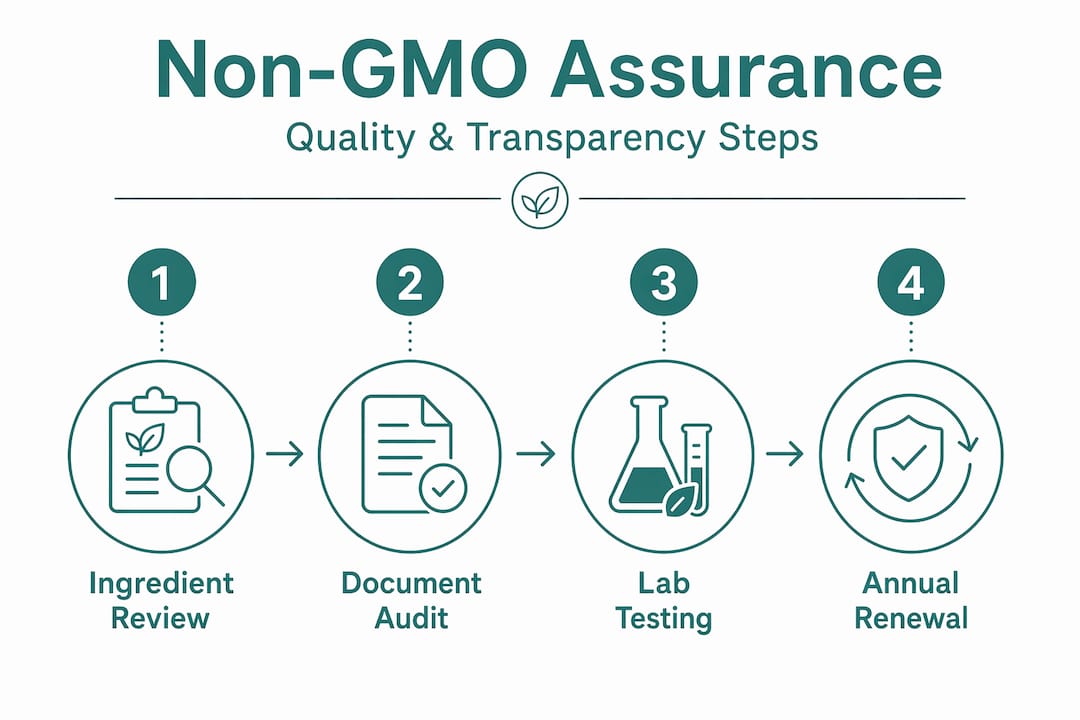
Non-GMO certification is a supply chain discipline, not just a product test. Non-GMO certification involves documentation of entire supply chains with audits and testing of high-risk ingredients over months. That means a certified supplement brand must trace each ingredient from its agricultural origin through every processing step to the finished product. The paperwork alone is substantial; the practical auditing requirements make the process demanding for any manufacturer.
Here is how certification typically proceeds:
- Application and ingredient mapping. The brand identifies all ingredients and flags those with high GMO risk, such as soy lecithin or ascorbic acid derived from corn.
- Supply chain documentation. Each supplier in the chain provides documentation confirming non-GMO sourcing, often going back to the farm level.
- Third-party testing. High-risk ingredients are batch tested by an independent laboratory to confirm GMO presence remains below the 0.9% threshold.
- On-site audits. Facilities handling high-risk ingredients may be audited for segregation practices to prevent cross-contamination.
- Certification granted. Products meeting all requirements receive the certification seal for use on packaging.
- Annual renewal. Certified products undergo annual renewal with new testing to ensure ongoing adherence to non-GMO standards.
This annual renewal is a detail many consumers do not know. A non-GMO seal is not a permanent award. It must be re-earned each year. If a supplier changes, a new ingredient batch is introduced, or a facility alters its handling practices, the testing must reflect that. This dynamic quality control is what separates credible certification from a one-time marketing exercise.
“Annual renewal of non-GMO certification means the seal you see today reflects current testing, not a years-old assessment.”
For consumers seeking clarity on supplement labelling, this is the most reassuring aspect of credible non-GMO verification: it is ongoing. Organisations like IGEN, the International Genetically Modified Organism Evaluation and Notification Programme, provide independent GMO certification services recognised internationally, adding another layer of verifiable assurance.
Pro Tip: When assessing a supplement brand’s non-GMO claims, check whether their certification is issued by a named third party and whether the certification is listed as current on the certifying body’s public registry.
Non-GMO supplements in the market: growth, costs, and consumer appeal
Armed with knowledge of health and quality assurances, you can now better appreciate the market context and practical considerations of choosing non-GMO supplements.
Non-GMO supplements command a price premium in most retail settings. The typical range is 30 to 60 percent above comparable conventional products. This premium reflects three real cost drivers: third-party testing and certification fees, the scarcity of verified non-GMO raw materials for key ingredients, and the additional supply chain management required to maintain segregation and documentation. These are not arbitrary margins; they are the cost of the standard.
The US non-GMO omega-3 supplement market is growing faster than conventional segments, driven by consumer demand for clean-label and verified products. This growth extends well beyond omega-3. Non-GMO demand has risen sharply across prenatal vitamins, magnesium formulations, collagen products, and cognitive health supplements.
| Supplement category | Non-GMO market growth | Primary consumer group |
|---|---|---|
| Omega-3 fatty acids | High | Cardiovascular, ageing adults |
| Prenatal vitamins | Very high | Pregnant women |
| Collagen peptides | High | Skin, joint, and ageing support |
| Magnesium formulas | Moderate to high | Stress, sleep, metabolic health |
| Cognitive support blends | High | Adults 45 and above |
Retailers are responding to this shift. Major health-focused retail channels now routinely require third-party non-GMO verification as a condition of shelf placement. This means the advantages of non-GMO products are not only consumer-driven but increasingly built into the commercial infrastructure of the supplement industry.
Practical factors worth considering when navigating costs:
- Certification costs are fixed per brand, meaning larger product ranges spread the cost across more units, sometimes narrowing the premium
- Subscription purchasing often reduces the per-unit cost without compromising quality
- Bundled product ranges from sustainable supplementation approaches can offer better per-supplement value than single-product buying
- Price alone is not a quality indicator, and an uncertified product sold cheaply may carry hidden costs to ingredient integrity
Choosing and using non-GMO supplements wisely for healthy ageing
With market insight in hand, you are well-prepared to select and incorporate non-GMO supplements safely and effectively.
With no FDA pre-approval for safety or efficacy, consumers should seek supplements with credible third-party non-GMO certification for trust. This regulatory gap means the burden of quality assurance falls almost entirely on the consumer and on brands willing to seek independent verification. Knowing how to evaluate a product removes much of that burden.
Follow this practical process when choosing non-GMO supplements for your ageing and vitality regimen:
- Check for a named third-party certification seal. Look for Non-GMO Project Verified or an equivalent internationally recognised mark. A self-declared “non-GMO” claim without a certifying body behind it is unverifiable.
- Review the ingredient list for high-risk inputs. Soy, corn, and canola derivatives are common in supplement manufacturing. If these appear without certification covering them, question the non-GMO claim.
- Confirm clear dosage and usage instructions. Products making ambiguous claims or failing to state clear dosages are a quality signal in their own right.
- Avoid products making disease treatment claims. Supplements are not medicines. Any product claiming to treat or cure a condition is misrepresenting both itself and the regulatory framework.
- Consult a healthcare provider if you are pregnant, breastfeeding, managing a health condition, or taking prescription medicines. Non-GMO does not remove the need for professional guidance on appropriate formulations.
- Track your results methodically. Use a simple log or app to track supplement benefits over time. Consistent monitoring lets you assess whether a product is genuinely supporting your vitality and ageing goals.
Pro Tip: Give any new supplement a minimum of 8 to 12 weeks before assessing its impact. Many nutrients, particularly those supporting cellular health and ageing processes, operate on longer physiological timescales than consumers typically expect.
Why non-GMO supplement choice is a vital marker of mindful health stewardship
There is a point at which choosing non-GMO supplements becomes about more than personal health. It becomes a statement about what you expect from the industry.
Most consumers do not realise that non-GMO certification requires continuous annual testing, not a one-time label, underscoring sustained quality commitment from certified brands. When you purchase a certified non-GMO supplement, you are effectively funding that ongoing verification process. You are also signalling to manufacturers that transparency and accountability are conditions of your loyalty, not optional extras.
This matters because the supplement industry is vast, largely self-regulated, and historically prone to label claims that outpace evidence. Non-GMO certification does not solve every problem in that landscape. However, it does impose an external accountability mechanism that most of the industry avoids because it costs time and money. Brands that pursue it are, by that decision alone, operating to a higher standard of consumer respect.
There is also an environmental dimension often overlooked in the non-GMO conversation. GMO crop systems are frequently associated with monoculture farming, reduced soil biodiversity, and increased herbicide application. Choosing non-GMO supplements connects your purchasing decision to agricultural practices with less chemical intensity. It is a small but directionally meaningful contribution to supply chain accountability.
Reviewing your supplement safety steps in this broader context reveals that mindful health stewardship is not just about what you consume. It is about the entire system your consumption supports. Non-GMO certification is one of the clearest lenses through which you can see whether a brand shares that understanding.
Discover Vivetus non-GMO supplements for vitality and healthy ageing
You now have a clear framework for understanding non-GMO supplements, their certification standards, health relevance, and how to evaluate them. The next step is finding a source that puts these principles into practice consistently.
Vivetus offers a carefully selected range of supplements built around ingredient transparency, third-party verification, and scientifically supported formulations designed for vitality and healthy ageing. Each product is chosen with the same rigour you have just applied to your evaluation process. From the energy and vitality bundle to targeted support for cognitive and cardiovascular health, Vivetus products are designed to align with your informed approach to supplementation. Explore the evidence-based supplement benefits behind our range, and review our supplement safety guidance for practical advice on integrating supplements into a long-term vitality plan.
Frequently asked questions
What does non-GMO mean on a supplement label?
Non-GMO on a supplement label means the product contains ingredients that are not genetically modified, verified through testing and supply chain controls limiting GMO presence below 0.9% for high-risk ingredients in verified products.
Are non-GMO supplements safer or more effective than regular supplements?
Non-GMO supplements reduce exposure to genetically modified ingredients and associated chemical residues, though non-GMO alone does not guarantee higher nutrient absorption or overall supplement quality. Formulation, dosage, and additional third-party testing remain equally important.
How can I be sure a supplement is truly non-GMO?
Look for a named third-party certification seal such as Non-GMO Project Verified, which involves documentation, auditing, and annual testing to ensure sustained ingredient integrity rather than a one-time assessment.
Are non-GMO supplements suitable for pregnant women and sensitive individuals?
Many healthcare practitioners recommend non-GMO supplements for these groups, and non-GMO supplements may be a better choice for children and pregnant women to minimise exposure to genetically modified ingredients and herbicide residues. Professional advice is still essential for appropriate formulations.
Why do non-GMO supplements often cost more than regular supplements?
Price premiums for non-GMO supplements reflect certification costs, supply constraints, and ingredient quality requirements, including annual testing, supply chain documentation, and the scarcity of verified raw materials at scale.