

NMN for over-50s: what to take, how much, and why
If you’re over 50 and asking whether NMN is worth taking, the honest answer is: it’s a reasonable, evidence-informed option to consider, not a must-have and not a gimmick. Trial data supports raising blood NAD+ safely at studied doses, with modest gains in walking speed and sleep quality in some older adults. Start low, track results over 8 to 12 weeks, and treat it as one part of a wider health plan.
A sensible start plan:
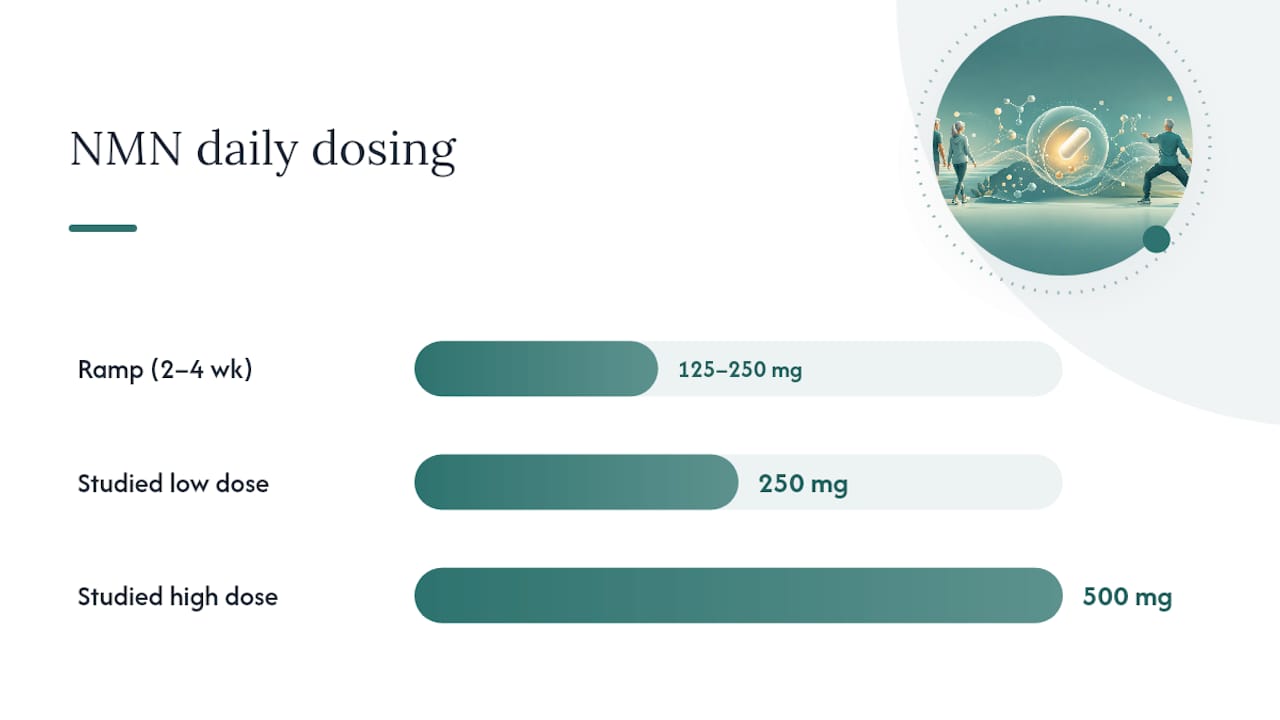
- Begin at a lower dose (around 125 to 250 mg) for two to four weeks to check tolerability.
- Take it in the morning, with or without food.
- Speak to your GP first if you take prescription medication or manage a chronic condition.
- Run an 8 to 12 week trial before judging whether it’s working for you.
Safety first: anyone on anticoagulants, diabetic medication, or with liver disease should get medical clearance before starting NMN. This is general information, not a substitute for individual medical advice.
Key Takeaways
NMN reliably raises blood NAD+ at studied doses of 250 to 500 mg/day and shows modest, trial-supported benefits for walking speed and sleep quality in adults over 50.
| Point | Details |
|---|---|
| Start low, build gradually | Begin at 125 to 250 mg/day for 2 to 4 weeks before reaching a 250 to 500 mg target dose. |
| Expect gradual functional change | NAD+ rises early; walking speed and sleep improvements typically emerge by week 8 to 12. |
| Check medications first | Anyone on anticoagulants, diabetic medication, or with liver disease needs GP clearance. |
| Prioritise verified purity | Choose products with a third-party COA confirming declared NMN content and no contaminants. |
| Consider a tested bundle | Vivetus’s Energy & Vitality bundel combines NMN with complementary nutrients and third-party testing for a structured 8 to 12 week trial. |
Table of Contents
- What is NMN and how does it raise NAD+?
- Why people over 50 look at NMN in the first place
- How to dose NMN: a practical start plan for 50+
- What to expect, and by when
- Safety, side effects and who should check with a doctor first
- Choosing a reliable NMN supplement
- What the strongest trials actually show
- When I’d personally consider NMN at 50+
- Try NMN with confidence: Vivetus’s Energy & Vitality bundle
- Key studies worth reading next
- Sources
What is NMN and how does it raise NAD+?
NMN, or nicotinamide mononucleotide, is a small molecule your cells convert directly into NAD+, a coenzyme every cell needs to produce energy and repair itself. Taken orally, NMN gets absorbed and converted into NAD+ in the bloodstream and tissues, which is why trials measure blood NAD+ levels as their primary marker of effect.
NAD+ matters because it fuels mitochondria, the structures inside muscle and nerve cells that generate usable energy. Foundational biochemical research has mapped the NAD+ metabolic pathway in detail, showing why a molecule feeding that pathway might plausibly support muscle function and cellular repair as you age.
NAD+ levels decline with age in most tissues studied. NMN is one of the few interventions shown in human trials to reverse that decline, at least in blood, within weeks of supplementation.
Why people over 50 look at NMN in the first place
Ageing brings a cluster of changes that overlap almost exactly with what NMN trials measure:
- Falling NAD+ levels in blood and tissue.
- Slower walking speed and reduced grip strength.
- Disrupted sleep quality and shorter deep-sleep periods.
- Shifting metabolic markers, including insulin sensitivity.
Trial data lines up with several of these concerns. A 12-week randomised study found that 250 mg/day NMN raised blood NAD+, helped maintain walking speed, and improved sleep quality in older adults compared with placebo. A separate trial in healthy older men reported nominal gains in gait speed and grip strength at the same dose.
Keep expectations grounded, though. NMN is not an instant vitality fix, and a recent meta-analysis of randomised trials found effects on body composition and several metabolic endpoints remain inconsistent across studies.
How to dose NMN: a practical start plan for 50+
Most human trials in older adults have tested doses between 250 mg and 500 mg per day, with some short-term studies going as high as 1,200 to 1,250 mg without serious safety signals in small cohorts, according to early dosing research. A 60 day trial using 300 mg/day reported good tolerability and measurable NAD+ increases, though not every efficacy marker reached statistical significance.
A stepwise approach works better than jumping straight to a full dose:
- Weeks 1 to 2: start at 125 to 250 mg daily, taken in the morning, and note any digestive upset or headaches.
- Weeks 3 to 4: if well tolerated, move up to your target dose, typically 250 to 500 mg daily.
- Weeks 5 to 12: hold your dose steady and track outcomes weekly rather than daily, since NAD+ and functional changes build gradually.
| Factor | Practical guidance |
|---|---|
| Starting dose | 125 to 250 mg/day for 2 to 4 weeks |
| Target dose | 250 to 500 mg/day, most commonly studied range |
| Timing | Morning intake, aligned with natural circadian NAD+ rhythms |
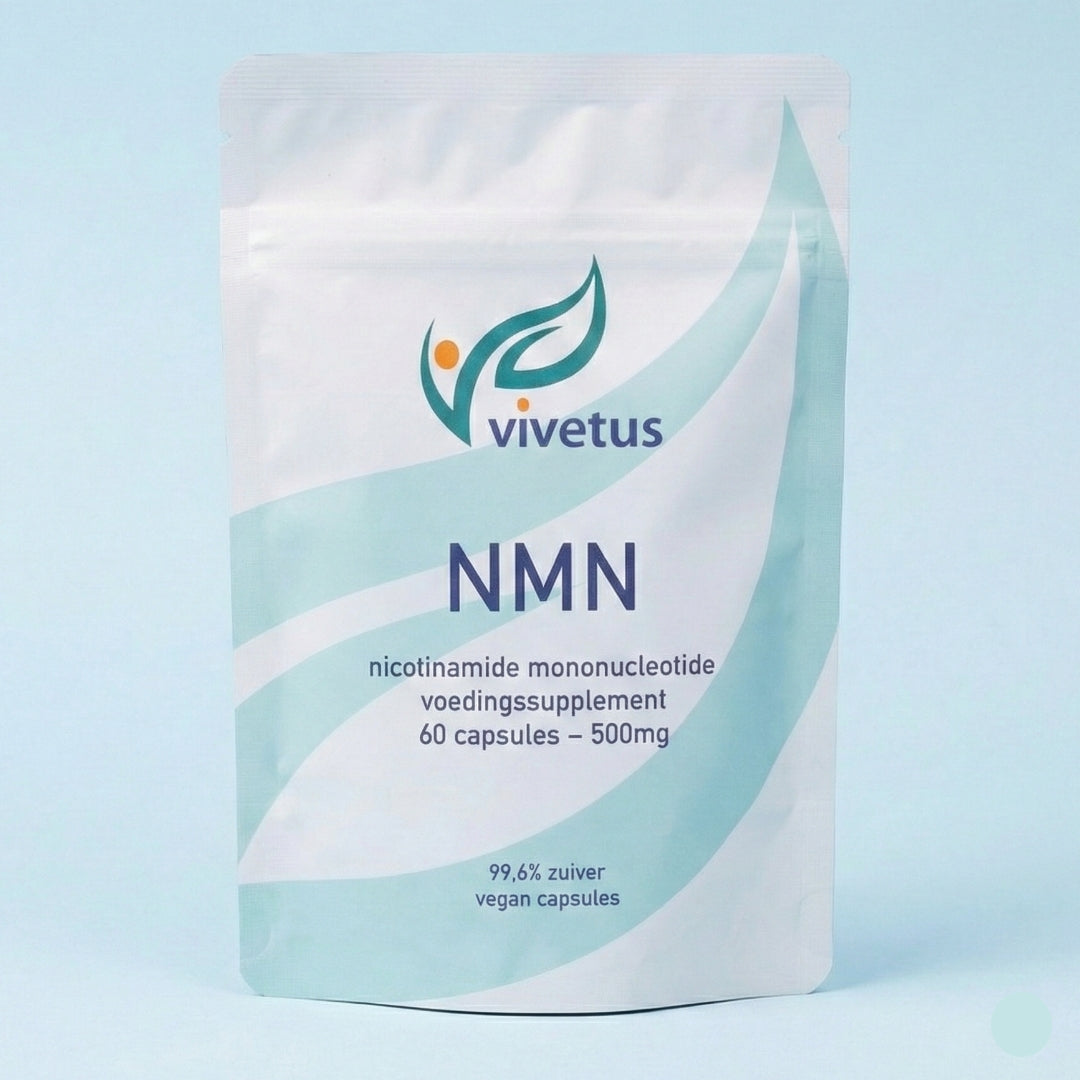
| Form | Capsules for consistent dosing; powder is fine if measured accurately |
| What to track | Walking pace, subjective energy, sleep quality score |
Capsules suit most people because they remove guesswork from measuring. Powder works too, provided you weigh doses consistently rather than eyeballing a scoop.
What to expect, and by when
Blood NAD+ tends to rise first, often measurable well before you feel anything. Functional changes follow a slower curve.
- By week 4: NAD+ metabolites typically climb; energy or sleep changes are usually subtle or absent.
- By week 8: some people report better sleep quality and steadier energy through the afternoon.
- By week 12: walking speed and grip strength may show small, measurable improvements in line with trial data.
The clearest trial signal comes from the 12-week study in older adults, which found NMN helped maintain walking speed and improved sleep quality alongside a rise in blood NAD+. Don’t expect visible body composition changes. Current evidence for shifts in muscle mass or fat percentage remains weak and inconsistent, so judge success by function and how you feel, not the mirror.
Safety, side effects and who should check with a doctor first
Across trials using 250 to 300 mg/day, NMN has generally been well tolerated, with a comprehensive review of ten clinical trials reporting no serious adverse events at these doses, though it stresses that long-term safety data beyond several months remains limited.
Certain groups need medical input before starting:
- Anyone taking anticoagulants or blood-thinning medication.
- People managing diabetes with insulin or oral medication, since NMN may affect insulin sensitivity, as seen in a trial of postmenopausal women with prediabetes.
- Anyone with existing liver disease or abnormal liver function.
Contact your GP if you notice: persistent nausea, unusual fatigue, jaundice, or any new symptom that appears after starting supplementation.
Pro Tip: If your clinician agrees it’s useful, ask for a baseline liver enzyme check before you start and again after 8 to 12 weeks, especially if you plan to continue beyond six months.
Choosing a reliable NMN supplement
Quality varies enormously between brands, and purity is the one thing you genuinely cannot judge by eye. Look for:
- A third-party certificate of analysis (COA) confirming NMN content and purity.
- Clearly declared NMN content per capsule or gram, not vague “proprietary blend” labelling.
- Testing for heavy metals and contaminants.
- Vegan formulation, if that matters to you.
Pro Tip: Ask the supplier directly for their most recent batch-specific lab report rather than a generic marketing certificate. A vendor with years of published testing history is a far stronger signal than one relying on before-and-after claims.
What the strongest trials actually show
The evidence base for NMN in people over 50 is genuinely promising, but it’s still early. The trials worth weighing most heavily include:
Sample sizes across these trials remain small, typically under 70 participants, and durations rarely exceed 12 weeks. Most volunteers were healthy or a specific subgroup, which limits how confidently results generalise to everyone over 50.
Trial registries also show real variation in participant age, health status, and dosing, which is worth remembering before assuming one study’s results apply to your situation. Treat a personal trial as exactly that: a trial, with your own tracking, not a guaranteed outcome.
When I’d personally consider NMN at 50+
I’d look at NMN seriously if I noticed a measurable dip, slower walking pace, or sleep that stayed poor despite fixing the basics first. It works best as one lever alongside exercise and diet, not a substitute for either.
Try NMN with confidence: Vivetus’s Energy & Vitality bundle
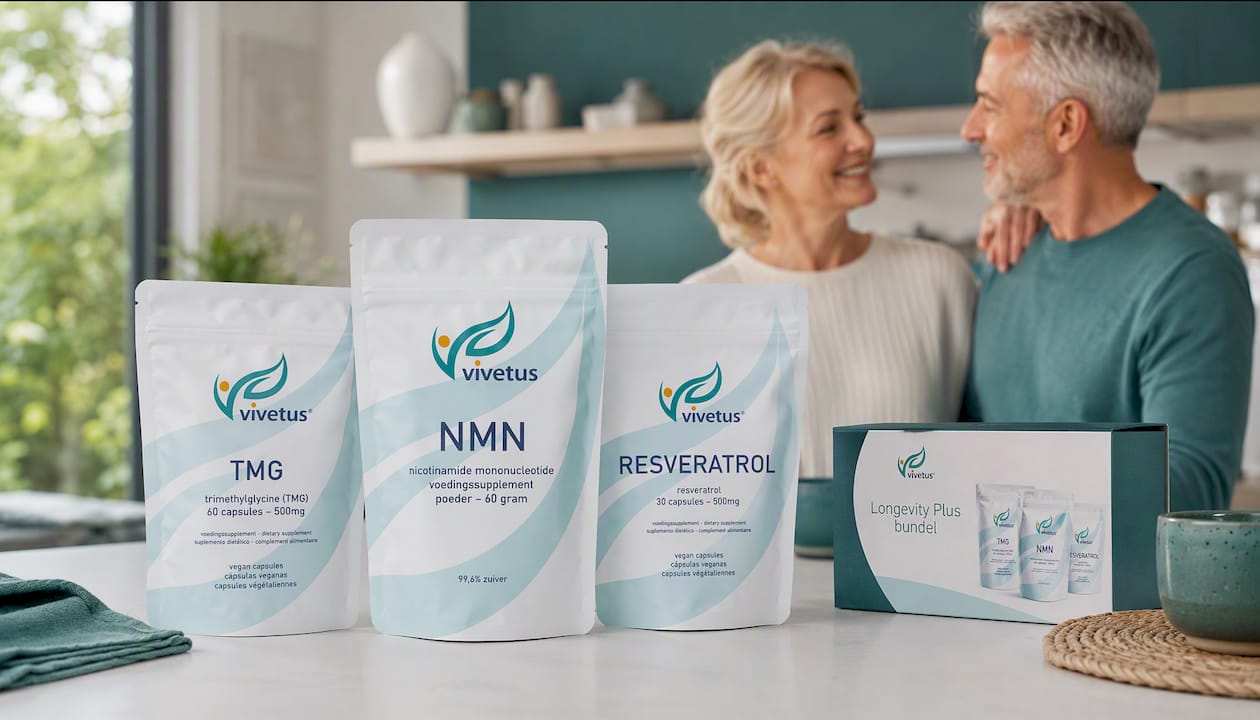
If the evidence above has you leaning towards giving NMN a proper trial, the practical question becomes which product to trust. Vivetus’s 💪 Energy & Vitality bundel pairs NMN with complementary longevity nutrients, formulated vegan and backed by third-party purity testing, so you’re not starting your 8 to 12 week trial on a guess.
Speak to your GP before starting, particularly if you take regular medication, and keep a simple weekly journal of energy, sleep, and walking pace so you have real data by week 12, not just an impression. For a deeper look at studied doses and product quality before you buy, Vivetus’s complete guide to buying NMN is worth reading first.
Key studies worth reading next
- Comprehensive safety review across ten clinical trials.
Compare doses and durations carefully. Shorter, healthier-volunteer trials tend to show cleaner results than longer studies in mixed populations.
Sources
- Ingestion of β-nicotinamide mononucleotide increased blood NAD levels, maintained walking speed, and improved sleep quality in older adults in a double-blind randomized, placebo-controlled study - PMC
- Chronic nicotinamide mononucleotide supplementation elevates blood nicotinamide adenine dinucleotide levels and alters muscle function in healthy older men | npj Aging
- Science
- Frontiers in Aging 2022: safety and anti‑ageing effect trial of 300 mg NMN
- The Safety and Antiaging Effects of Nicotinamide Mononucleotide in Human Clinical Trials: an Update - PMC