

Healthy habits for longevity: your 2026 guide
TL;DR:
- Healthy habits for longevity include daily practices in diet, exercise, sleep, stress management, and preventive care that can add up to 14 years to lifespan. Consistent physical activity, healthy dietary patterns like Mediterranean or DASH, quality sleep, social connections, and regular health screenings are key factors that improve healthspan. Combining these habits has a synergistic effect, greatly surpassing the influence of genetics alone on lifespan and well-being.
Healthy habits for longevity are daily lifestyle practices that directly extend life expectancy and improve healthspan, the number of years you live in good health. Research shows these habits can add up to 14 years to your life compared to an unhealthy lifestyle. The five core pillars are diet, physical activity, sleep, stress management, and preventive care. Longevity science has shifted its focus from simply living longer to living better, with more years spent active, independent, and free from chronic disease.
1. What physical activity habits best support longevity?
Physical activity is the single most studied modifiable factor in longevity research. WHO guidelines recommend 150–300 minutes of moderate activity or 75–150 minutes of vigorous activity each week. Meeting this target consistently adds an average of 1.4 years to a man’s lifespan and 1.68 years to a woman’s.

Consistency matters far more than intensity. Sustained activity through middle age reduces the risk of major chronic diseases by 10–28% after the age of 60. A single intense month of exercise followed by months of inactivity delivers almost none of these benefits.
Strength training deserves equal attention alongside aerobic activity. Lifting weights or using resistance bands twice weekly preserves muscle mass, improves balance, and reduces fall risk. Falls are a leading cause of injury and loss of independence in older adults, making strength work a direct investment in long-term function.
Practical ways to build daily movement into your routine:
- Walk or cycle for short errands instead of driving
- Take the stairs as a default, not an exception
- Schedule two strength sessions per week as fixed appointments
- Break up long periods of sitting with five minutes of movement every hour
- Join a group class or walking club for social accountability
Pro Tip: Aiming for 6,000–8,000 steps daily is a practical and well-supported benchmark for adults over 50. You do not need to reach 10,000 steps to gain meaningful longevity benefits.
2. Which dietary patterns most effectively promote longevity?
Nutrition for longevity is not about short-term restriction. It is about consistent, sustainable eating patterns that reduce disease risk over decades. Adherence to the Mediterranean, DASH, AHEI, and plant-based diets reduces mortality risk by 18–24%, based on a study of more than 100,000 individuals tracked over ten years. These patterns share common features: high fibre, plant proteins, healthy fats, and minimal processed food.
Diet alone can add 2–3 years to life expectancy independently of other lifestyle factors. That figure holds regardless of smoking status or physical activity level, which underlines how powerful food choices are on their own.
Key dietary features shared by longevity-supporting eating patterns:
- High intake of vegetables, legumes, and whole grains
- Oily fish or plant-based omega-3 sources at least twice weekly
- Olive oil or other unsaturated fats as the primary cooking fat
- Low consumption of ultra-processed foods, red meat, and added sugar
- Adequate protein intake to protect muscle mass as you age
Micronutrients play a supporting role. The DO-HEALTH study found that combining omega-3s, vitamin D, and regular exercise synergistically reduces frailty and the risk of invasive cancers. No single nutrient produces these results alone.
Pro Tip: Whole foods deliver nutrients in combinations your body absorbs more effectively than isolated supplements. Use targeted supplementation to fill specific gaps, not to replace a varied diet.
| Dietary pattern | Key feature | Longevity benefit |
|---|---|---|
| Mediterranean | Olive oil, fish, vegetables | Reduced cardiovascular mortality |
| DASH | Low sodium, high potassium | Lower blood pressure and stroke risk |
| AHEI | Whole grains, nuts, low red meat | Reduced overall mortality |
| Plant-based | Legumes, fibre, minimal animal products | Lower inflammation and cancer risk |
3. How does quality sleep contribute to longevity?
Sleep is not passive recovery. It is when your body repairs cells, consolidates memory, and regulates immune function. Quality sleep accounts for approximately 20% of the preventive lifestyle contribution to longevity. The recommended duration for adults is 7–9 hours per night.
Chronic poor sleep accelerates biological ageing. It raises inflammatory markers, disrupts blood sugar regulation, and increases the risk of cardiovascular disease, type 2 diabetes, and cognitive decline. Getting fewer than six hours consistently is not a neutral choice. It is a measurable health risk.
Practical sleep hygiene habits that improve both duration and quality:
- Keep a fixed wake time seven days a week, including weekends
- Avoid screens for at least 60 minutes before bed
- Keep your bedroom cool, dark, and quiet
- Limit caffeine after 2:00 PM
- Avoid alcohol within three hours of sleep, as it fragments sleep architecture
Short naps of 10–20 minutes in the early afternoon can support recovery without disrupting night-time sleep. Longer naps or those taken late in the day tend to reduce sleep pressure and make falling asleep at night harder.
4. Why managing stress and nurturing social connections matters
Chronic stress shortens life. It raises cortisol, drives systemic inflammation, and accelerates the progression of cardiovascular disease and metabolic disorders. Social isolation carries a mortality risk comparable to smoking, making loneliness one of the most underestimated health risks for older adults.
Strong social bonds reduce dementia risk and improve resilience to physical illness. Engagement in meaningful activities, whether volunteering, group sport, or regular social meals, has been validated as a longevity factor in population-level research. This is not about forced positivity. It is about building a life with enough connection and purpose to buffer the physiological effects of stress.
Practical approaches to stress reduction and social engagement:
- Practise diaphragmatic breathing or progressive muscle relaxation daily
- Maintain at least two or three regular social commitments each week
- Limit news consumption to defined periods rather than continuous scrolling
- Spend time outdoors, as natural environments measurably reduce cortisol
- Seek professional support for persistent anxiety or low mood rather than managing alone
Pro Tip: Laughter and play are not trivial. Research confirms that positive emotional states reduce inflammatory markers. Scheduling activities you genuinely enjoy is a legitimate health strategy, not an indulgence.
5. What role do preventive health behaviours play in longevity?
Preventive care is the habit most adults undervalue. Regular screenings reduce mortality risk by approximately 10% by catching cardiovascular, metabolic, and cancer-related conditions before they become life-limiting. Early detection consistently produces better outcomes than late-stage treatment.
The benefits of preventive care multiply when combined with the other lifestyle pillars. A person who eats well, exercises regularly, and attends annual health checks gains more than the sum of those individual habits. The lifestyle influence on longevity surpasses genetic factors by more than threefold in mortality risk reduction, particularly in adults over 80.
Key preventive behaviours to build into your annual routine:
- Schedule cardiovascular risk assessments, including blood pressure and cholesterol checks
- Attend age-appropriate cancer screenings as recommended by your GP
- Monitor fasting blood glucose if you have metabolic risk factors
- Cease smoking, as it negates the benefits of almost every other healthy habit
- Moderate alcohol to within evidence-based limits
Pro Tip: Ask your GP for a personalised longevity plan rather than a generic annual check. Tailoring screenings to your specific risk profile, family history, and lifestyle produces far more useful information.
Key takeaways
Lifestyle choices, not genetics, are the primary driver of how long and how well you live. A healthy lifestyle profile lowers mortality risk by 40.7%, compared to 13% for genetic factors alone.
| Point | Details |
|---|---|
| Exercise consistently | Aim for 150–300 minutes of moderate activity weekly; add strength training twice per week. |
| Follow proven dietary patterns | Mediterranean, DASH, and plant-based diets reduce mortality risk by 18–24%. |
| Prioritise 7–9 hours of sleep | Quality sleep drives immune function and cellular repair, contributing 20% to longevity outcomes. |
| Reduce stress and stay connected | Social isolation carries mortality risks equal to smoking; regular connection is a health necessity. |
| Attend preventive screenings | Early detection through regular check-ups reduces mortality risk by approximately 10%. |
What I have learned from years of watching longevity research evolve
The most common mistake I see is treating these habits as separate boxes to tick. People focus intensely on diet for a month, then shift to sleep, then to exercise, as if each one works in isolation. The research is clear: the benefits are synergistic across combined interventions. Diet, movement, sleep, and social connection interact with each other in ways that amplify every individual effort.
I also think the genetics conversation does more harm than good for most people. Yes, your genes influence your baseline. But lifestyle outranks genetics in mortality risk reduction by a factor of more than three. Waiting for a genetic predisposition to excuse inaction is a choice with measurable consequences.
The other thing worth saying plainly: perfection is not the goal. A person who walks four days a week, sleeps reasonably well, eats mostly whole foods, and maintains a few close friendships will outlive and outperform someone chasing an extreme protocol that collapses under real-life pressure. Consistency across all five pillars, even at a moderate level, is the most evidence-backed strategy available. Start with the habit that feels most achievable and build from there. The compounding effect over a decade is significant.
— Jord
Supporting your longevity habits with Vivetus
Building daily habits for better health takes time, and targeted nutritional support can help you stay consistent. Vivetus offers scientifically backed supplements designed specifically for healthy ageing and vitality, including the Energy & Vitality bundel, which combines key nutrients to support physical performance and daily energy levels.
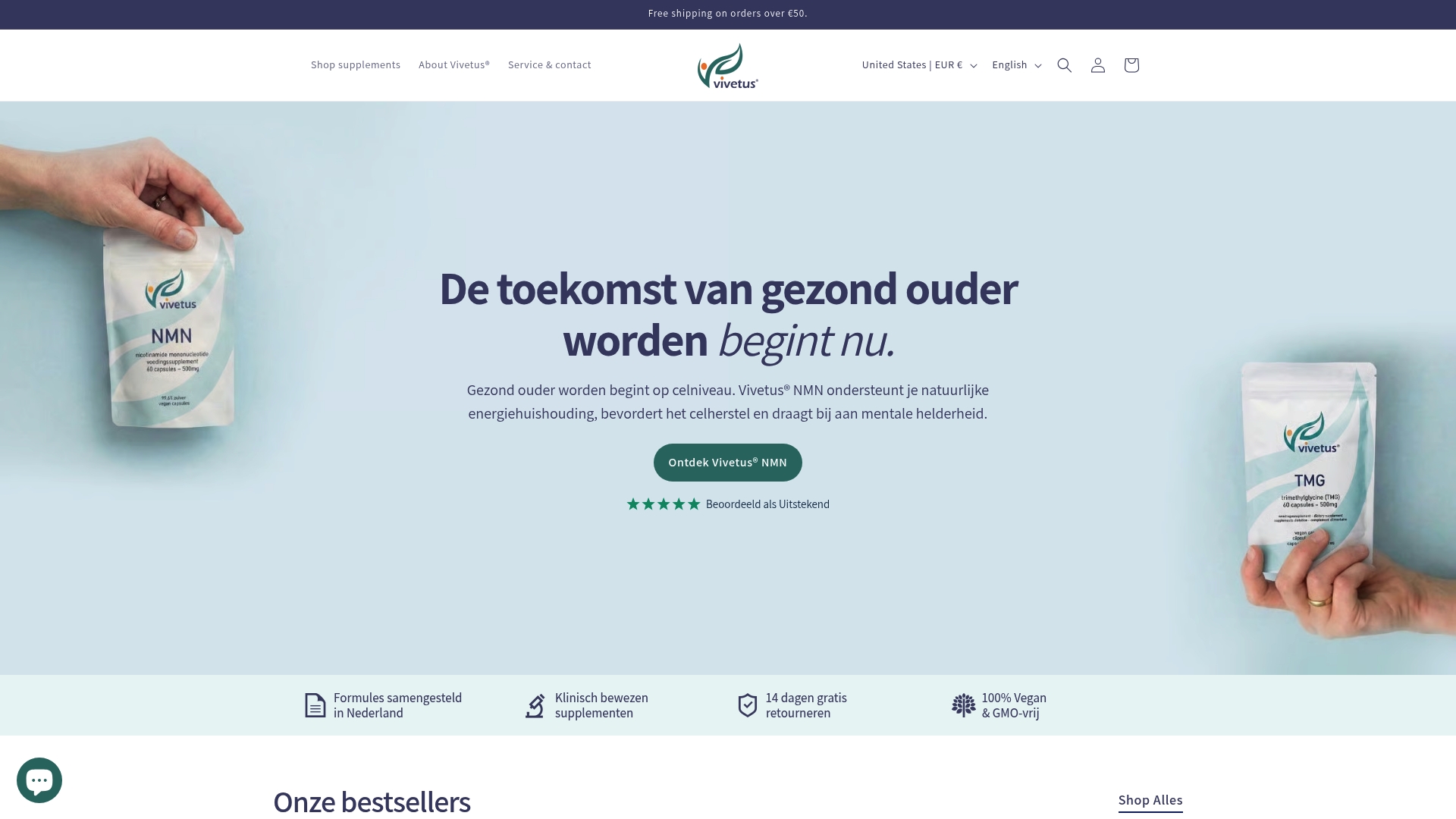
Vivetus ships internationally with free delivery on orders over €50, making it straightforward to maintain your supplement routine wherever you are. Browse the full range at vivetus.eu and find the products that fit your longevity plan.
FAQ
What are healthy habits for longevity?
Healthy habits for longevity are daily practices in diet, exercise, sleep, stress management, and preventive care that reduce chronic disease risk and extend healthspan. Research shows they can add up to 14 years to life expectancy compared to an unhealthy lifestyle.
How much exercise do you need for a longer life?
WHO guidelines recommend 150–300 minutes of moderate activity weekly. Consistent exercise over decades reduces major chronic disease risk by 10–28% after the age of 60.
Which diet is best for longevity?
The Mediterranean, DASH, AHEI, and plant-based dietary patterns all reduce mortality risk by 18–24%. They share high fibre, plant proteins, and low processed food intake as core features.
Does sleep really affect how long you live?
Yes. Quality sleep of 7–9 hours nightly accounts for approximately 20% of the preventive lifestyle contribution to longevity. Chronic poor sleep raises inflammation and accelerates biological ageing.
Do genetics or lifestyle matter more for longevity?
Lifestyle matters more. A healthy lifestyle profile reduces mortality risk by 40.7%, compared to roughly 13% for genetic factors alone. This gap widens further in adults over 80.