

The role of omega 3 in aging: what science shows
TL;DR:
- Omega-3, especially EPA and DHA, reduces inflammation, supports mitochondrial function, and aids muscle preservation as we age. Clinical doses over 2 grams daily combined with resistance training yield significant benefits in muscle mass and strength, taking several months to show results. While eating fish lowers heart disease risk, fish oil supplements have limited cardiovascular effects, and patience is essential to observe true health improvements.
Most adults know omega-3 is good for them. Far fewer understand precisely what it does to the body as it ages. The role of omega 3 in aging goes well beyond taking a capsule to feel healthier. At a cellular level, EPA and DHA, the two most active forms of omega-3, influence inflammation, muscle preservation, and brain function in ways that become increasingly relevant from your forties onwards. This article cuts through the noise and lays out what the research actually demonstrates, including where supplements fall short of the claims made for them.
Table of Contents
- Key takeaways
- How omega-3 fatty acids affect biological ageing
- Omega-3 and muscle preservation in older adults
- Omega-3 and cardiovascular and cognitive health
- Safety considerations for older adults
- Practical ways to incorporate omega-3 into healthy ageing
- My perspective on omega-3 and healthy ageing
- Support your vitality with Vivetus
- FAQ
Key takeaways
| Point | Details |
|---|---|
| Omega-3 targets inflammaging | EPA and DHA reduce chronic low-grade inflammation, a core driver of accelerated biological ageing. |
| Dose and timing matter | Clinically meaningful muscle benefits require more than 2 g EPA+DHA per day for several months. |
| Supplements differ from dietary fish | Eating fish twice a week lowers heart disease risk; fish-oil capsules do not replicate this effect fully. |
| Exercise amplifies omega-3 gains | Combining omega-3 with resistance training produces better muscle outcomes than either approach alone. |
| More is not always better | Evidence points to a U-shaped dose response, with 1 g/day sometimes outperforming higher doses on certain markers. |
How omega-3 fatty acids affect biological ageing
Understanding the role of omega 3 in aging starts at the cellular level. Two mechanisms stand out above the rest: the control of chronic inflammation and the support of mitochondrial function.
As you age, your body tends to settle into a state of persistent, low-level inflammation. Researchers call this “inflammaging,” and it underlies conditions from muscle loss to cognitive decline. EPA and DHA counter this process directly. They incorporate into cell membranes, displacing pro-inflammatory fats, and they trigger the production of specialised pro-resolving mediators, molecules that actively switch off the inflammatory response rather than simply blunting it. Studies confirm that omega-3 lowers CRP, IL-6, and TNF-alpha, three of the key inflammatory markers associated with age-related disease.
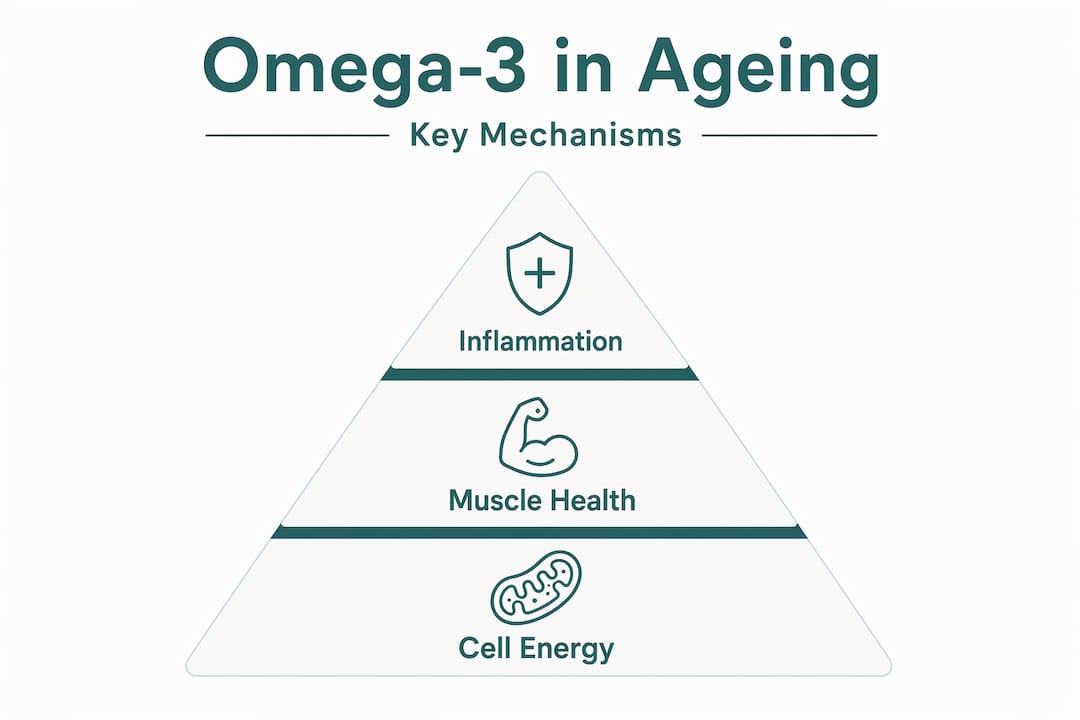
Beyond inflammation, omega-3 supports how your cells generate energy. Mitochondria, the structures inside cells that produce ATP, become less efficient with age. Omega-3 fatty acids appear to maintain mitochondrial membrane integrity and reduce oxidative stress, the cellular damage caused by reactive oxygen species. This matters because oxidative stress accelerates the very processes that make tissues age faster.
There is a third mechanism worth noting. Omega-3 activates the mTOR signalling pathway, which governs muscle protein synthesis. This is the same pathway stimulated by resistance training and dietary protein. Omega-3 does not replicate exercise, but it sensitises muscle cells to the anabolic signals that exercise and protein produce. This is a meaningfully different mechanism from simply reducing inflammation.
Pro Tip: Interpreting omega-3 research requires distinguishing between improvements in mechanistic biomarkers, such as inflammatory blood markers, and hard clinical endpoints, such as actual muscle mass gained or cardiovascular events avoided. The two do not always move in the same direction or at the same speed.
Omega-3 and muscle preservation in older adults
Sarcopenia, the age-related loss of muscle mass and strength, affects an estimated 10 to 27 percent of adults over 60 depending on the diagnostic criteria used. It predicts falls, fractures, loss of independence, and premature mortality. This is where the benefits of omega 3 for seniors become most tangible.
Clinical trials show that omega-3 supplementation above 2 g/day EPA+DHA improves thigh muscle volume, handgrip strength, and the anabolic signalling needed to rebuild muscle tissue. These are not marginal gains. In populations already showing signs of muscle decline, the effect is clinically relevant.

What the research also makes clear is that omega-3 works best alongside exercise. Combining omega-3 with resistance training consistently outperforms either intervention alone, particularly in women. The likely explanation is that omega-3 sensitises muscle cells to amino acids, helping to overcome the blunted anabolic response that older adults experience. This phenomenon, sometimes called anabolic resistance, is one reason older adults need more protein and more stimulus to build muscle than younger people.
One finding that surprises many readers is the timeframe involved. Omega-3 membrane incorporation takes weeks to months to reach a physiologically meaningful level, tied to the lifespan of red blood cells (roughly 16 weeks). This explains why short clinical trials often show inconsistent results. A 4-week trial is simply not long enough to observe the full effect on muscle tissue.
| Approach | Muscle benefit | Notes |
|---|---|---|
| Omega-3 alone (>2 g/day) | Moderate improvement in mass and strength | Requires sustained supplementation over months |
| Resistance training alone | Strong improvement | Dependent on progressive load and recovery |
| Omega-3 combined with resistance training | Greatest improvement | Synergistic effect on anabolic signalling, particularly in older women |
| Low-dose omega-3 (<1 g/day) | Minimal or inconsistent | Insufficient for meaningful membrane incorporation |
Pro Tip: If you are using omega-3 to support muscle health, commit to at least 12 to 16 weeks before assessing the effect. Any shorter assessment window makes it nearly impossible to judge whether the supplementation is working.
Omega-3 and cardiovascular and cognitive health
The cardiovascular picture is more nuanced than most supplement marketing suggests. Eating fish at least twice a week is associated with lower heart disease mortality. Fish-oil supplements, by contrast, show limited overall cardiovascular benefit beyond specific applications. This distinction is one of the most misunderstood points in omega-3 research.
Where supplements do show clear, consistent effects:
- Fish oil reduces triglycerides significantly, a meaningful benefit for people with elevated levels
- Modest reductions in blood pressure are observed in people with hypertension
- Some improvements in HDL cholesterol appear, though a slight rise in LDL cholesterol has also been noted
- Endothelial inflammatory markers such as ICAM-1 show measurable reductions, though the dose that achieves this may be lower than many assume
That last point is particularly striking. A 12-week randomised controlled trial found that 1 g/day of fish oil reduced ICAM-1 by 24 percent. Higher doses of 2 g or 4 g produced no additional improvement. The U-shaped dose response suggests that reflexively increasing your dose to maximise benefit is not supported by the current evidence.
On the cognitive side, omega-3 and cognitive health are closely linked through DHA’s structural role. DHA comprises roughly 40 percent of the fatty acids in brain tissue and is concentrated in cell membranes throughout the central nervous system. It supports the fluidity of those membranes, facilitates signalling between cells, and appears to offer neuroprotective effects in elderly populations. Whether supplementation can meaningfully slow cognitive decline in cognitively healthy adults remains an area of active research, but the structural argument for maintaining adequate DHA intake throughout ageing is well-grounded.
Safety considerations for older adults
Omega-3 supplementation is broadly well tolerated, but a small number of considerations apply specifically to older adults.
- Bleeding risk: Fish-oil supplements can reduce platelet aggregation. For most people this is not a clinical concern, but medical supervision is advisable for anyone taking anticoagulant medicines such as warfarin or clopidogrel.
- Immune modulation: High-dose supplementation may alter immune responses. This is relevant for anyone with an autoimmune condition or who is immunocompromised.
- Allergies: Individuals with fish or shellfish allergies should check the source of their supplement carefully and consult a clinician before starting.
- LDL cholesterol: As noted above, high-dose fish oil can modestly raise LDL cholesterol. Those with existing lipid disorders should monitor this marker.
- Supplement quality: The omega-3 content and oxidation levels in fish-oil capsules vary considerably between products. Look for supplements that carry third-party purity certification.
Pro Tip: Before beginning any omega-3 supplement at therapeutic doses, review your full list of medicines and existing health conditions with a clinician. You can find further context on supplement safety for ageing adults to guide that conversation.
Practical ways to incorporate omega-3 into healthy ageing
Getting omega-3 right in practice comes down to a few consistent habits rather than a single intervention.
- Prioritise dietary sources first. Fatty fish such as salmon, mackerel, sardines, and herring provide EPA and DHA alongside a range of other nutrients. Aim for at least two portions per week.
- Use supplements to fill genuine gaps. If dietary intake is consistently low, for instance if you avoid fish or are plant-based, a quality EPA+DHA supplement is a practical solution.
- Match dosage to your goal. For general cardiovascular and inflammatory support, 1 g/day EPA+DHA may be sufficient. For muscle-specific goals in the context of sarcopenia risk, research points to more than 2 g/day being necessary.
- Pair with resistance training. Omega-3 combined with exercise produces synergistic benefits for muscle mass and strength. This combination does more than either component independently.
- Set realistic expectations. Omega-3 fatty acids and longevity are linked through years of consistent intake and healthy lifestyle patterns. These are not effects that appear after a few weeks.
- Avoid indefinitely escalating your dose. The data on vascular inflammatory biomarkers suggests diminishing returns above modest doses. More is not reliably better.
For plant-based readers, algae-derived DHA supplements provide the most direct source of long-chain omega-3 without relying on fish as the intermediary. The omega-3 in flaxseed and walnuts is alpha-linolenic acid (ALA), which converts to EPA and DHA in the body at low efficiency, typically under 10 percent. This makes algae oil a more reliable option for those avoiding fish.
My perspective on omega-3 and healthy ageing
I have watched the conversation around omega-3 shift considerably over the years. When I first started working with people on healthy ageing protocols, fish oil was often positioned as a near-universal solution. Take enough of it and inflammation would drop, muscles would stay strong, and the heart would be protected. The research has since produced a much more specific picture, and I think that specificity is actually useful rather than disappointing.
In my experience, the adults who benefit most from omega-3 are those who combine it with resistance training, eat adequate protein, and treat it as one component of a considered approach rather than a correction for an otherwise poor diet. I have seen clients with measurable sarcopenia risk make real progress using omega-3 at therapeutic doses alongside structured strength training. I have also seen people spend years taking low-dose supplements with no meaningful change in muscle function, largely because the dose was insufficient and exercise was absent.
What I think is genuinely underappreciated is the timeframe. Most people assess supplements the way they assess medicines: expecting a response within days or a few weeks. Omega-3 works on a timeline measured in months, driven by the biology of cell membrane turnover. Patience, consistency, and pairing with lifestyle factors are what separate modest benefit from real, measurable change.
The question “can omega 3 reverse aging” comes up often. It cannot reverse ageing. No supplement can. What the evidence supports is that sustained, adequate intake of omega-3 fatty acids, especially EPA and DHA, can meaningfully slow certain processes that drive decline. That is a realistic and genuinely worthwhile goal.
— Jord
Support your vitality with Vivetus
If this article has helped clarify how omega-3 fits into a healthy ageing strategy, the logical next step is making sure your supplementation actually delivers what you need. At Vivetus, the focus is on supplements backed by research, formulated for people who take their health seriously.

The Energy & Vitality bundle from Vivetus is designed with exactly this kind of informed approach in mind. It brings together targeted nutritional support aligned with the mechanisms discussed in this article, including the kind of sustained daily intake that matters for ageing adults. Pair it with resistance training, consistent dietary habits, and regular monitoring. That is how omega-3 supplement benefits translate from research findings into genuine, lasting results. Explore the Vivetus range and find what fits your goals.
FAQ
What is the main role of omega-3 in ageing?
Omega-3 fatty acids, particularly EPA and DHA, reduce chronic low-grade inflammation, support muscle protein synthesis, and maintain the structural integrity of brain and cardiovascular cells. These effects collectively slow several key biological mechanisms that drive age-related decline.
How much omega-3 do older adults need for muscle health?
Clinical evidence supports a dose above 2 g/day of combined EPA and DHA for meaningful improvements in muscle mass and strength in older adults. Lower doses may be sufficient for cardiovascular inflammatory benefits but appear insufficient for sarcopenia-related outcomes.
Do fish-oil supplements protect the heart in the same way that eating fish does?
No. Dietary fish consumption is consistently linked with lower heart disease mortality, while fish-oil supplements show strong evidence only for lowering triglycerides and modest effects on blood pressure. The broader cardiovascular protection associated with eating fish does not appear to transfer to capsule form.
How long does it take for omega-3 to show benefits?
Because omega-3 must incorporate into cell membranes before producing measurable physiological effects, a minimum of 12 to 16 weeks of consistent supplementation is generally required. Short-term trials of four to eight weeks often underestimate the true benefit.
Can omega-3 improve cognitive function in older adults?
DHA makes up roughly 40 percent of the fatty acids in brain tissue and supports cell membrane function and neural signalling. Supplementation is associated with neuroprotective effects in elderly populations, though research on slowing cognitive decline in healthy older adults is still developing.